
In the final years of his life, Beethoven, completely deaf and in failing health, turned his compositional efforts to the string quartet medium. The five resulting pieces, along with the stand-alone De Große Fuge, were destined to become some of the most heroic achievements of the Western musical canon. They were also Beethoven’s last musical utterances before his death in 1827.
Origin Story
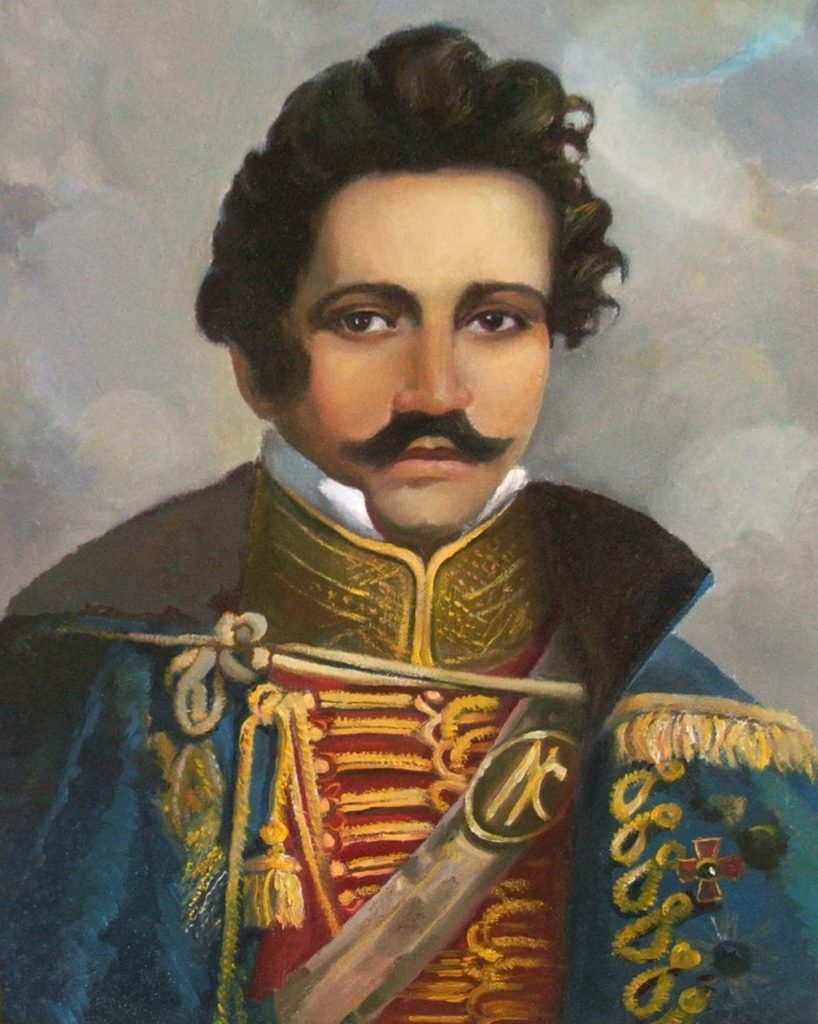
In the fall of 1822, Beethoven was approached by the Russian Prince Nikolai Galitzin, who wrote from Saint Petersburg: “Being as passionate an amateur of your talent. I am taking the liberty of writing to you to ask if you would be willing to compose one, two, or three new quartets. I shall be delighted to pay you for the trouble, whatever amount you would deem adequate.” The commercial opportunity would have been welcomed by Beethoven, who was in a difficult financial condition at the time. But it had also been a dozen years since he had last composed a quartet; we can only guess how he might have felt about a return to the form. Before undertaking the project, Beethoven would complete his Ninth Symphony, 1822-1824, and a sacred choral work, the Missa Solemnis, whose 1824 premiere, in Saint Petersburg, was underwritten by Prince Galitzin.
After intensive work on such large-scale pieces, returning to the detailed intricacies of composing for string quartet might have been refreshing for Beethoven, especially after what had now been a 14-year hiatus. Whatever the case, by March of 1825, Beethoven had completed the first of his late quartets, Op. 127, and had already begun sketches for Op. 132 that would follow. That spring, however, Beethoven became seriously ill and nearly died. While he ultimately recovered, the premiere of Op. 132 was pushed to the fall of 1825. Although traditionally assigned an earlier number than Op. 132 because of the publication order, Op. 130 was actually the last of the Prince Galitzin set to be completed. Its premiere occurred in March of 1826.
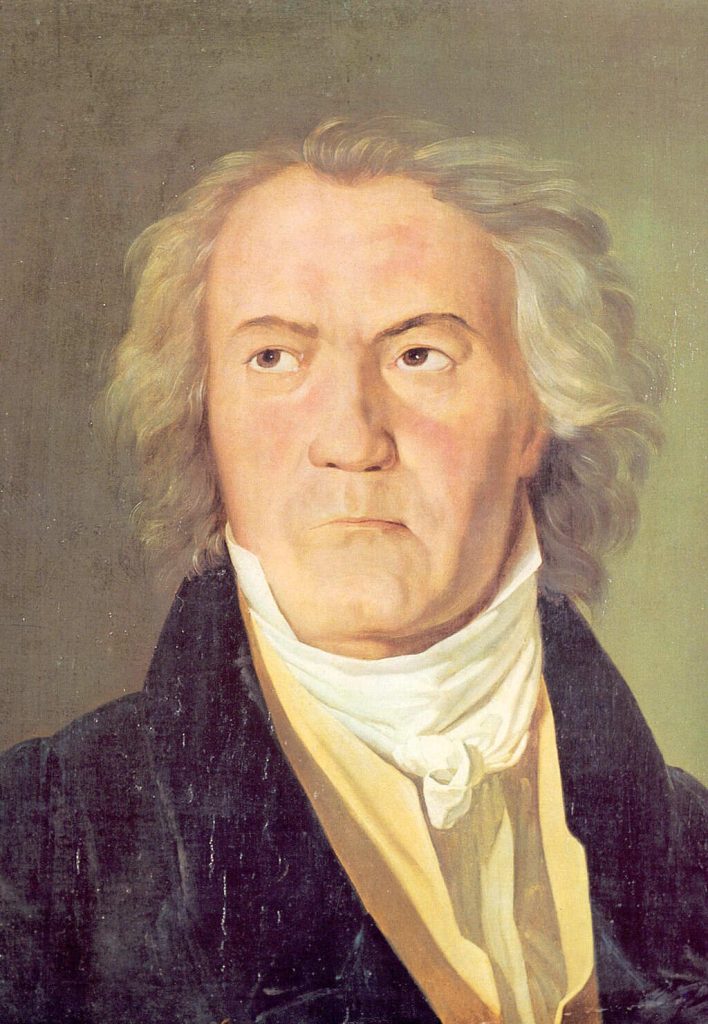
Paradoxically, Prince Galitzin wound up either unwilling or unable to keep up with payments to Beethoven for these three quartets in the composer’s lifetime; the debts owed to Beethoven’s heirs weren’t settled until many years after the composer’s death. But the work on the Prince Galitzin quartets must have stimulated Beethoven in other ways, for he continued to compose exclusively in the quartet vein through to the end of his life without commission. Op. 131, dedicated to Joseph von Stutterheim, was completed in 1826 and is thought to have been premiered in December of that year by the Müller Quartet. It was published in April of 1827, barely a month after Beethoven’s death. Op. 135, completed in October of 1826 and dedicated to Johann Nepomuk Wolfmayer, was the last major work that Beethoven composed. It was not premiered until 1828, a year after his death.
Beethoven’s last completed musical effort was the alternate final movement for Op. 130, completed at the end of 1826 as he once again fell gravely ill. This time, though, recovery was not in the cards. Beethoven died in March of 1827. Op. 133, De Große Fuge, the original final movement to Op. 130, was published posthumously in May of 1827. Beethoven’s own four-hand piano version of the De Große Fuge was published posthumously in 1837 as Op. 134.
Rocky Reception
Beethoven’s late quartets, and especially De Große Fuge, were longer and more complex motivically, harmonically, and contrapuntally than anything in the chamber music oeuvre that preceded them. Given the newness and challenges of the musical language of the late quartets, it is hardly surprising that they were received with confusion and derision at their introduction and in the years immediately following. Finding the pieces utterly opaque, many contemporaries attributed their incomprehension to Beethoven’s deafness.
In 1826, the Allgemeine musikalische Zeitung described the late quartets variously as “incomprehensible, like Chinese,” “a confusion of Babel,” and “an indecipherable horror.” Alexander Wheelock Thayer, author of the first scholarly biography of Beethoven, said of De Große Fuge: “It will scarcely ever touch the heart.” Violinist Louis Spohr (1784-1859) was quoted as saying that De Große Fuge was “in the same breath as the rest of Beethoven’s late work”—”an indecipherable, uncorrected horror.” Musicologist Alexander Oulibicheff (1794–1858) cited Beethoven’s deafness in dismissing the composer’s late output as the “negation of music itself.”
Even in today’s environment, Beethoven’s late quartets can sound bewilderingly “new” to audiences and critics. As late as 1979, American critic and musicologist Joseph Kerman described the introduction to the De Große Fuge: ”not an introduction but a table of contents that hurls all the thematic variations at the listener’s head like a handful of rocks.” Kerman went on to describe the Fugue itself as: “the most problematic single work in Beethoven’s output and … doubtless in the entire literature of music”
The Test of Time
Despite the early negativity, Beethoven’s late quartets also had admirers from the start. Franz Schubert is famously cited as wishing to hear Op. 131 on his deathbed in 1828 when he is quoted as saying, “After this, what is left for us to write?”
Even in the early part of the 19th century, support for the late quartets was growing. Between 1828 and 1838, a number of composers, critics, and musicologists including Friedrich Rochlitz in the Allgemeine musikalische Zeitung, Hector Berlioz in Le Correspondant, and Francois Fetis in Revue musicale all promoted greater understanding and acceptance of the late quartets. In the Neue Zeitschrift für Musik in 1831 and 1835, Robert Schumann described Op. 127 and Op. 131 in the most positive terms, as having a “grandeur … which no words can express. They seem to me to stand … on the extreme boundary of all that has hitherto been attained by human art and imagination.”
The list of admirers of Beethoven’s late quartets, both public and private, would grow to include luminaries such as Felix Mendelssohn, Richard Wagner, and Igor Stravinsky, who described De Große Fuge as “the most absolutely contemporary piece of music I know, and contemporary forever.” Pianist Glenn Gould said, “For me, the De Große Fuge is not only the greatest work Beethoven ever wrote but just about the most astonishing piece in musical literature.”
Misconceptions and Adjustments
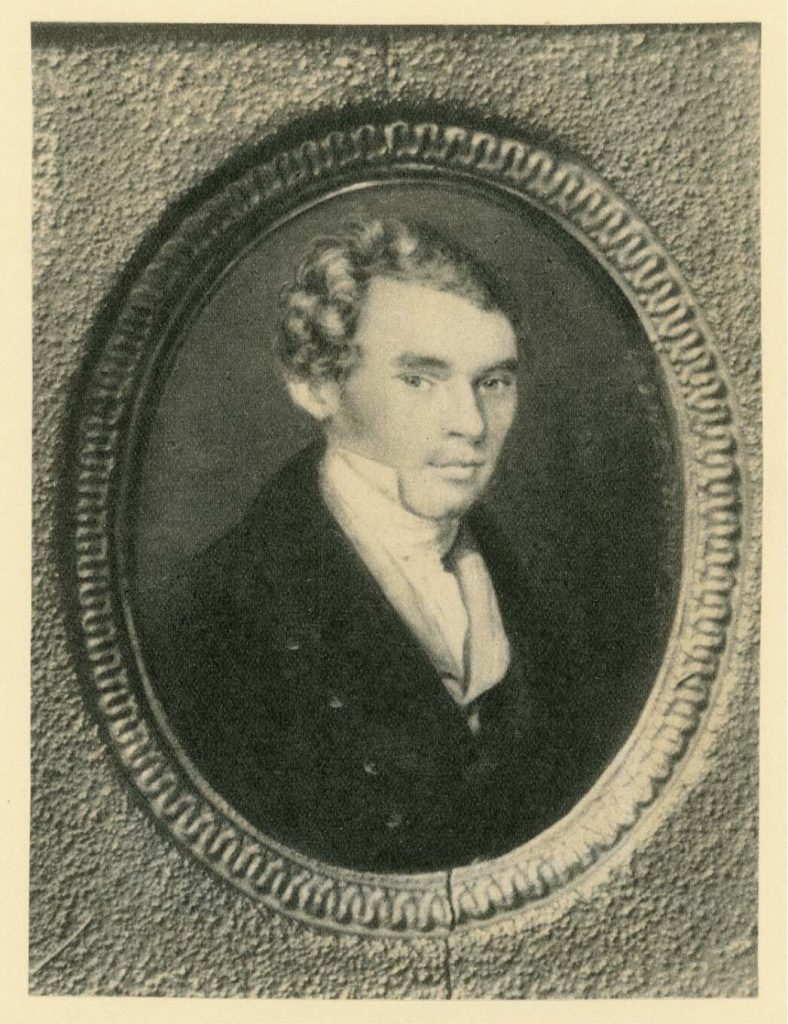
The outcry of criticism for the Große Fuge, the original final movement of Op. 130, caused Beethoven’s publisher, Artaria, to persuade him to compose an alternate last movement, leaving the Große Fuge to be published separately as Op. 133. Karl Holz, who premiered Op. 130 as second violinist in the Schuppanzigh Quartet, was charged by Artaria “with the terrible and difficult task of convincing Beethoven to compose a new finale, which would be more accessible to the listeners as well as the instrumentalists, to substitute for the fugue which was so difficult to understand. I maintained to Beethoven that this fugue, which departed from the ordinary and surpassed even the last quartets in originality, should be published as a separate work and that it merited a designation as a separate opus. I communicated to him that Artaria was disposed to pay him a supplementary honorarium for the new finale. Beethoven told me he would reflect on it, but already on the next day, I received a letter giving his agreement.”
And Finally…
The last two quartets along with the alternate movement for Op. 130 were no less profound than the quartets that preceded them. Op. 131 has sometimes been cited as Beethoven’s favorite and as the single most profoundly beautiful quartet of all. Even in the sublime sound world of late Beethoven, Op. 131 stands out in several ways. The work is through-composed, with the seven movements designed to be played without pause over approximately 40 minutes. Op. 131 is in the unusual key of C# minor and begins with a slow fugue, the subject of which forms the basis for much of the piece, utilizing that material in a cyclic form. Beethoven has been quoted as describing Op. 131 as “a new manner of part-writing and, thank God, less lack of imagination than before.”
The most memorable feature of Op. 132 (among many) is its third movement, entitled “Heiliger Dankgesang eines Genesenen an die Gottheit, in der lydischen Tonart” or “Holy song of thanksgiving of a convalescent to the Deity, in the Lydian mode.” This is music that touches universal feelings of thanks for recovery from illness, surely mirroring the near-death health scare that had interrupted Beethoven’s work on the piece the spring before it was completed.

Beethoven’s final quartet, Op. 135, is easily misunderstood. Where the other four late quartets are relatively long, at 40-45 minutes each, Op. 35 clocks in at under 25 minutes, making it the second shortest of the sixteen quartets that Beethoven composed. In terms of mood and texture, Op. 135 is generally lighter in its outer movements and in its short scherzo, for which Beethoven employs unusual pyrotechnics in the first violin part. Only in the third movement does Beethoven explore the depths and contrapuntal complexity of the most sublime music of the other late quartets. A short, seemingly serious introduction to the Finale would appear to raise the ultimate question of fate. Here, Beethoven has given titles to the thematic material: “Der schwer gefaßte Entschluß” (“The difficult decision”) and to the motives for the movement: The words “Muß es sein?” (“Must it be?”) are inscribed over a grave, minor-key, ascending line. The response follows, “Es muß sein!” (“It must be”), over a whimsical, major-key descending line. That answer actually forms the primary motive for the last movement, which, apart from a brief return to a heavy rendering of “The difficult decision” material, is a light and festive musical party.

It would be easy to interpret the FInale of Op. 135 as Beethoven asking the profound, ultimate question and answering it with a kind of philosophical whimsy as his final musical utterance. In fact Beethoven had no expectation of imminent death and the truth of the Finale of Op. 135 is much more banal than fatalistic: it turns out that the question “Muß es sein,” and the corresponding answer, “Es muß sein,” had become somewhat of a standing joke among Beethoven and his intimates. Beethoven had recently become annoyed with a wealthy music-lover, Ignaz Dembscher, after Dembscher had failed to subscribe to one of his concerts. Beethoven had refused to give Dembscher more scores. When Dembscher pressed for reconciliation, Beethoven suggested that he pay the subscription fee of 50 florins, to which Dembscher responded, “Muß es sein?” Beethoven’s answer is easy enough to guess!