
Stefan Hersh, Guarneri Hall’s Artistic Director, approached me last summer to spill some ink for a Bernard Rands festival he was putting together for the following year. On its surface, that sounded good to me. And then my head began to spin. I knew this name! I began searching ancient files and sure enough, there he was:

Back in 1999, I was living in Colorado Springs and hosting a weekly radio show called “ArtsPeak for Southern Colorado,” which consisted primarily of a long interview and a review segment. The guest for our November 10 broadcast was one Bernard Rands, a composer who was to be an artist-in-residence at Colorado College. Included were two special concerts: one with his 5 Scherzi and the other, all Rands, featuring Memo 4 for Flute, Memo 8 for Oboe, Espressione IV, and String Quartet No. 2. Interestingly enough, the featured violinist on the Scherzi was one Stefan Hersh.
As Rands told me when we were reminiscing about his Colorado Springs visit, this was the first time he had met Hersh – even though they were both living in Chicago. And so, a quarter of a century later, we have the two-concert mini-festival at Guarneri Hall, organized by Stefan Hersh: Rands at 90. Twenty-five years after our last encounter, Rands’ legend has only grown; his influence upon a younger generation of composers and performers is locked in and potent. In a recent interview, we restarted our journalistic relationship with the most obvious question I could think of:
David Sckolnik: Is there a big difference between being 65 and 90?
Bernard Rands: Not really. Other than the fact of the matter, I don’t really know what it means to be 90. I can’t work the number of hours I used to – like getting up at 4:00 or 5:00 in the morning and working 14, 15 hours a day, which was a fairly regular routine in my earlier years.
DS: Are you working on something right now?
BR: I’m just now sketching for a new orchestra piece. Some might think that’s a crazy thing to do.
DS: Why?
BR: Well, it’s hard work, an enormous challenge to refresh and convey something that’s not just ordinary, that’s something worthwhile and significant. I’ve had a passion for orchestras all my life – since I was a teenager. It got in my bloodstream. I just worship the phenomenon as one of the great constructs of Western civilization.
DS: As I was listening to your music, I couldn’t help but wonder, “What is it that’s driving this composer? What is it that he might be trying to mine in himself that is leading to this expression?” I wondered if it was emotional, spiritual, creating an abstract visual image, or trying to tell a story.

BR: All of the above. In a sense, they’re all inextricably bound to each other. Telling a story is an obvious difference from the late 19th-century tone poem. When the first note is played in a piece, what’s the next one and why? Not based solely on the theory of what it should do harmonically or melodically. But what is the energy that will carry it forward? So there’s an unfolding. It’s like a drama until it closes with the final cadence – 15 minutes, 20 minutes, a half an hour later, five minutes later, or even two minutes later. All of that is part of a story.
DS: Does it trouble you that only a small number of human beings will ever encounter your music? I haven’t seen Taylor Swift at any of your concerts. I’ll keep watching.
BR: Me too.
DS: It’s just that only a minuscule number of people know about or have an interest in New Music.
BR: Isn’t that also true of some of the repertoire we’ve inherited over two or three centuries? How many people know the [Beethoven] Grosse Fugue? To your point, there is a limited audience who decide not to access it. Not because it is inaccessible, but they are unwilling, incapable, or just bone-headed enough to ignore things that might or might not change their life were they to encounter them with an open mind, an open ear, and an open heart – but they choose not to do that. And that’s fine, and the world keeps going ‘round anyway. That doesn’t mean we shouldn’t do it. Somebody asked Rilke why he wrote poetry. He said, “I can’t do anything else.” That’s obviously idiotic. With his intellect, he could have done dozens of possibilities. But he did it because he had to. It’s got nothing to do with the commercial exploitation or whether Taylor Swift shows up. What we hope and intend is that by making our own tiny, miniscule contribution to something we can describe as beautiful, and it’s passionately delivered and exquisitely executed and nuanced, it’s worth doing. I don’t care whether people like my music or not.
DS: Let’s call it the great music chain. You are part of a long line of composers who received guidance from those before them and then have taught, mentored and inspired those who have come after them. Luciano Berio, Pierre Boulez, Luigi Dallapiccola, and Bruno Maderna all helped to guide you on your path. What would you like your link in this chain to represent?
BR: When I’ve finished a piece, that I’ve done it to the very best of my ability. That it, therefore, carries within it in a mysterious, complex way all that I learned from my relationships with my teachers and other fine musicians.
DS: Do you expect that your work will stay on the musical map into the future?
BR: I believe in it. But I can’t do anything more than what I’ve done, which is, “Here it is. Make what you will of it.” I’m not vain about it at all. It’s there for anybody who wants to listen to it. I can’t legislate whether they do or not.
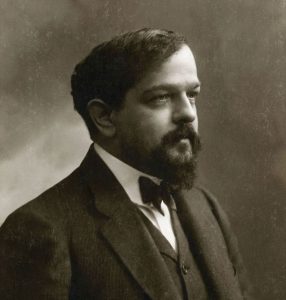
DS: When I saw that the Debussy String Quartet was on the program for March 9, I circled back and asked Stefan if that was the choice of the Terra String Quartet. He fired back with an emphatic “No.” That this was your choice.
BR: Ever since I encountered Debussy’s music, I’ve spent the rest of my life trying to come to terms with what the legacy is and was and continues to be. Even as a teenager, when I first heard it, I was baffled – it didn’t do what I’d been formally taught what music was supposed to do. And yet, my ears told me there was something absolutely marvelous about it, and I couldn’t figure it out. But I’ve spent the last 70 years or more working on that. So, it’s not just a tip of the hat to Claude. It’s essential to understand my aesthetic.
DS: Besides Taylor Swift, what are your guilty musical pleasures?
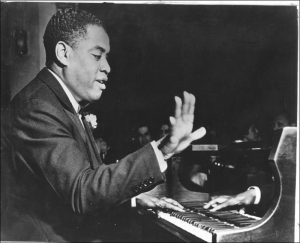
BR: I do listen to quite a bit of jazz- a lot of jazz, in fact. In particular, two pianists derived from Art Tatum in a certain way. I’m thinking of Oscar Peterson, who is a phenomenal virtuoso – one of the greatest jazz players of all time, in my opinion – and another one who destroyed himself, Bill Evans. Those, to me, are two of the high-speed composers, meaning they compose as they think. But the danger of that journey is unique. And yet, what gems they created. It always gives me great joy to listen to them.
Rands at 90 Parts 1 and 2 will be presented at Guarneri Hall on March 8 at 6:30 PM and March 9 at 2:00 PM.