
Amongst the dreary doldrums of winter, we dream of spring. Throughout history, composers and poets have drawn on springtime imagery to evoke feelings of rebirth, renewal and the vibrancy of nature. Combining elements of descriptive poetics with vibrant musical colors, composers across Guarneri Hall’s Dreams and Departures program evoke the beauty and excitement of the coming spring. United through floral imagery, the program highlights works connected by dynamic juxtapositions that bring together memories of the past with contemporary ruminations on music as a transient, dramatic force.

Two floral-themed songs by Austrian composer Franz Schubert—Viola (“Violet”) and Vergissmeinnicht (“Forget-Me-Not”)—capture the anticipation of the coming spring through descriptions of blooming flowers and sparks of new love. Elizabeth Ogonek’s Blue & Green captures the transfer of poetic imagery to music. Inspired by two texts by Virginia Woolf, the composer develops small musical ideas into expansive sonic landscapes filled with dramatic textural juxtapositions. Closing with Schubert’s sublime Fantasia in F minor for four hands at the piano, the atmospheric opening melody transforms into a rhythmic meditation that explores a vast emotional range, from fury, to nostalgia, to youthful vitality.
Franz Schubert (1797-1828): Viola (D. 786) and Vergissmeinnicht (D. 792) (1823)
Franz Schubert composed over 600 songs in the span of only seventeen years, from his days as a student at the Stadtkonvikt right up until his death. He changed the status of art song from works primarily for amateur performers to a genre of central importance to the canon of classical music. Well-known for his complete song cycles, including Die schöne Müllerin and Winterreise, Viola (“Violet”) and Vergissmeinnicht (“Forget-Me-Not”) represent some of his most beloved stand-alone songs. Both songs were composed towards the end of his life in 1823, utilizing the evocative poems of Franz von Schober (1796-1882). Schober was an Austrian poet, librettist, lithographer, and actor. During his philosophy studies in Vienna, he met Schubert and they quickly became close friends, leading to many artistic collaborations.
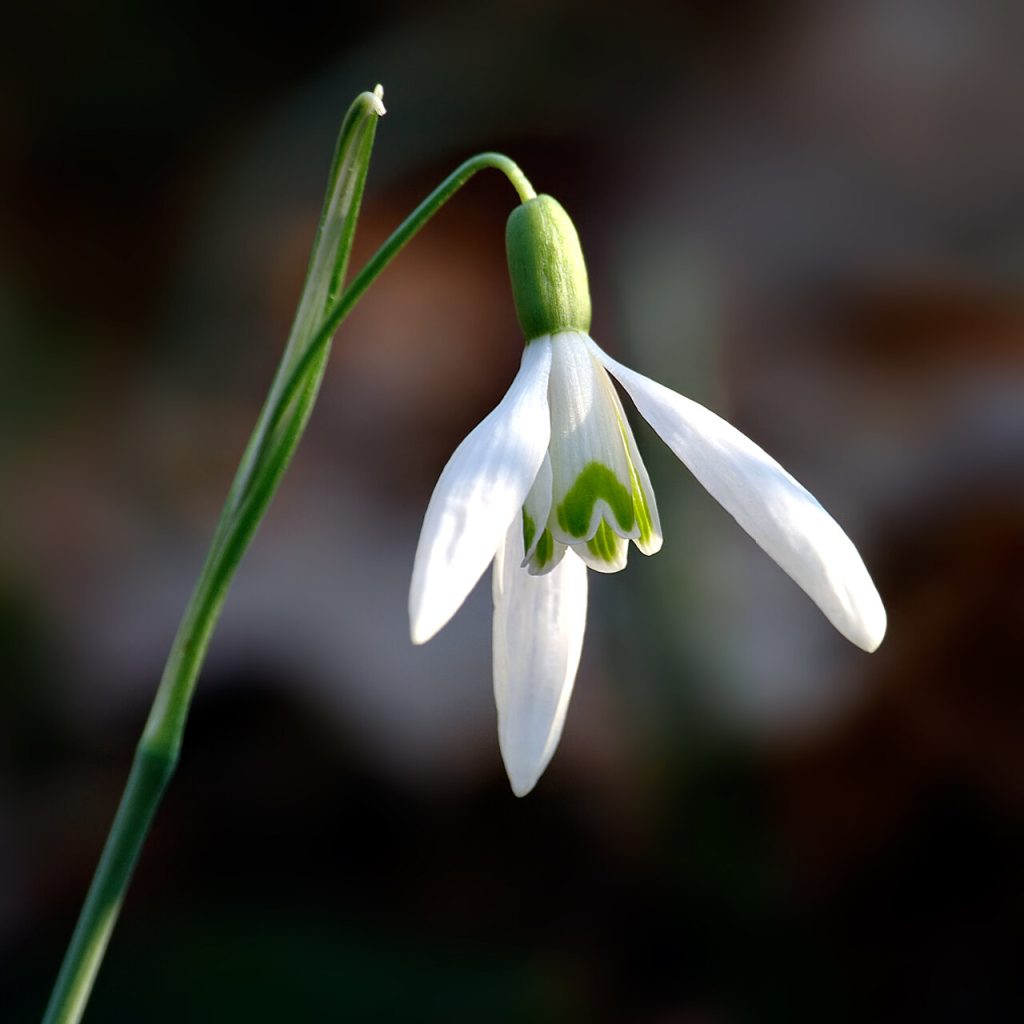
Schubert composed Viola based on Schober’s poem titled “A Flower Ballad.” The original poem contains nineteen verses, with Schubert grouping them into sections to create a through-composed style. The song describes a snowdrop flower, blooming in the meadow, awaiting the happy time of the arrival of her bridegroom. As he nears, victorious from his battle with the winter, more flowers begin to rise from their slumber to celebrate the wedding feast. With great anticipation, a lovesick flower hurries to meet him but wastes away before he arrives, rising from the soil too quickly and withering away. Serving as a metaphor for pain and longing, the music is unified through Schubert’s musical treatment of recurring poetic verses. A repeated 16th note rhythm permeates the piano accompaniment, the beating heart of the young flower anticipating the spring. Long, lyric lines flow gracefully over the rhythmic accompaniment, creating a stunning contrast between fierce articulations and elegant vocal melodies.

Vergissmeinnicht was composed in the same year as Viola, in the spring of 1823. Based on another poem by Franz von Schober, the ballad uses floral imagery as a metaphor for Ovid’s story of the metamorphosis of Narcissus. The tale centers on lost innocence and youthful longing as a young girl, grieving and confused, finds solace and understanding by gazing into a river. As she gazes, enraptured by her own reflection, she finds her inner desires mirrored by nature’s beauty and realizes that she is deeply comforted by the imagery. The young girl is transformed by love rather than succumbing to it; through her yearning and immersion in nature she discovers her true self. Unified by Schubert’s characteristic text painting, both piano and voice work in collaboration to depict the longing of the young girl through harmonic tension and release. The music begins on a melancholy note. A minor mode is outlined by Schubert’s idiomatic lyric lines, rising and falling with the wave-like accompaniment. As the song develops, the music becomes more aggravated, 16th notes fluttering in the left hand of the piano accompaniment as the soprano reaches the dramatic climax of the tale before a nostalgic, lighter texture concludes the piece.
Elizabeth Ogonek (b. 1989) Blue & Green

Elizabeth Ogonek (b. 1989) is known for her ability to transfer poetic imagery into stunning musical colors. Themes of wanderlust and transience come up frequently in her work as she uses contrasting dynamics and textures to paint the visual into the aural. She often uses poetry and literature as sources of inspiration, with two texts by Virginia Woolf serving as the inspiration and the title for Blue & Green. The work features dramatic rhythmic flourishes in the piano accompaniment that are ornamented by the flowing lyric lines of the vocal part. Ogonek takes small segments of Woolf’s text and repeats them in melodic fragments that work in tandem with sudden harmonic shifts to emphasize the evocative nature of the poetry. The piece finishes intimately following a dramatic vocal climax, with lilting rhythmic figures in the accompaniment and gentle dynamics underscoring the repetition of the final word of text as the music fades away.
Franz Schubert (1797-1828): Fantasia in F minor, D. 940 (1828)
Schubert’s Fantasia in F minor for piano and four hands is considered one of his most important piano works. Composed in the last year of his life, the work is dedicated to his former pupil Caroline Esterházy. The work was completed in March 1828 and performed for the first time in May of the same year. Schubert played the premiere along with Franz Lachner (1803-1890), a German composer and conductor. Schubert passed away in November of 1828, with his friends and family taking on the publication of a number of his works after his death including the Fantasia in F minor.

A Fantasia represents a stylistic bridge between traditional sonata form and the more free-form tone poem. The title evokes the improvisatory nature of the melodic material, developed throughout the work with decorative flourishes and ornamentations. Schubert’s Fantasia is divided into four movements which are played without pause:
I. Allegro molto moderato: The piece opens with a lyrical melody in dotted rhythms that ultimately transitions to a more funereal second theme.
II. Largo: The second movement opens with aggressive arpeggiations, decorated with trills in the full dramatic range of the piano. The intense opening gives way to a more romantic, lyrical theme which is based upon the opening material.
III. Scherzo, Allegro vivace: The third movement begins with triumphant elegance, with both players working in tandem as a fugue-like form is outlined. Bright and lively, the movement navigates A major juxtaposed with F# minor before ending in dramatic octaves that transition back to the home key of F minor.
IV. Finale, Allegro molto moderato: The finale restates the first movement’s primary theme in both F minor and F major before transitioning to a fugue-like theme. A bar of silence highlights the dramatic closure of the work, as the first theme reprises and builds rapidly to a conclusion with chords across the piano echoing a secondary theme before subsiding to a reflective end.
Covering an enormous range of emotion, the Fantasia is a transformative journey that is not only a mediation on yearning and unrequited love but is also full of majestic, dreamy melodies that capture the full power of the piano. Across a wide dynamic and melodic range, the piece is full of romantic nostalgia that expands throughout each movement as poetic imagery is transformed into powerful musical evocations of desire and loss.