Guarneri Hall is proud to honor Pulitzer Prize-winning composer Bernard Rands with a two-day celebration of his 90th birthday. Today’s concert will feature two of Rands’ own compositions, one by Augusta Read Thomas, his wife, and one by Claude Debussy, whose work has deeply influenced Rands.
Bernard Rands (b. 1934): Memo 9 — Fantasia for Solo Cello (World Premiere)
“A rhapsodic exploitation of the cello’s unique melodic and harmonic qualities, celebrating the exceptional artistry of Alexander Hersh.”
– Bernard Rands
Bernard Rands’ compositional range includes operas and symphonic works that draw exotically beautiful colors from large forces, as well as intimate solo works that are perfect expressive vehicles for the instruments for which they are written. Rands composed Fantasia for Solo Celloin 2023 for cellist Alexander Hersh, with whom Rands has enjoyed a personal relationship dating back to Hersh’s childhood. The piece is dedicated “With love and admiration to Alexander Hersh.” The Fantasia for Solo Cello is cleverly constructed on coded fragments of the performer’s initials. The music exudes joy and whimsy and reflects a genuine affection between the composer and the performer.
Claude Debussy (1862-1918): String Quartet in G minor, Op. 10 (L.91)
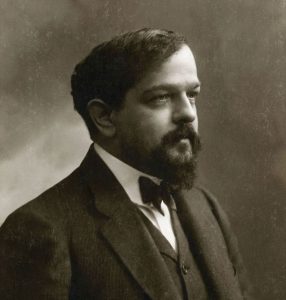
“M. Debussy takes a particular delight in successions of rich chords that are dissonant without being crude, and more harmonious in their complexity than any consonances could be: over them, his melody proceeds as on a sumptuous, skillfully designed carpet of strange coloring that contains no violent or discordant tints.”
–Paul Dukas
Debussy completed his only string quartet in 1892 at the age of 31, one year before his groundbreaking Prelude to the Afternoon of a Faun. Reservations about the work expressed by Ernest Chausson, the original dedicatee, caused Debussy to change the dedication to the Ysaye Quartet, which premiered it in 1893 to a mixed reception. The sensuality and experimental harmonies of Debussy’s quartet must have sounded strange to audiences in 1893. Despite the early resistance, the piece would eventually become a much-admired staple of the canon.
Augusta Read Thomas (b. 1964): Magic Gardens for String Quartet, Movement #2

“Throughout this composition’s less-than-3-minute-duration, it unfolds a labyrinth of musical interrelationships and connections that showcase the musicians in a virtuosic display of rhythmic agility, counterpoint, skill, energy, dynamic range, timbre, clarity, and majesty.”
– Augusta Read Thomas
Including Augusta Read Thomas’s music on a program honoring Bernard Rands is only fitting since the two have been married for 30 years. The McCollin Fund and the Musical Fund Society of Philadelphia commissioned Thomas to compose Magic Gardens to celebrate the organization’s bicentennial in 2020. Thomas took her inspiration from Isaiah Zagar’s iconic mosaic art, found on more than 200 public walls throughout Philadelphia. The Rolston String Quartet premiered magic Gardens at the Perelman Theater in Philadelphia on May 1, 2022.
Bernard Rands: String Quartet No. 3 Islands of Repose
“String Quartet No. 3 is in one continuous movement made up of fifteen sections, each of which (after the first) is a “transcription” of a previous section, though not always in chronological order. The use of the term “transcription” refers to the sense that an existing passage of music is rearranged for the ensemble.”
– Bernard Rands
The changes in each of the “transcriptions” described above can be minimal: minute changes of registration, dynamics, rhythms, or more extreme alterations that stand out against the repetition in the work. It is a fascinating compositional structure in which recall and repetition set the stage for an evolutionary process of musical development. String Quartet No. 3 was commissioned by the Institute for American Music at the Eastman School of Music for the Ying Quartet, who gave its first performance in 2004.