
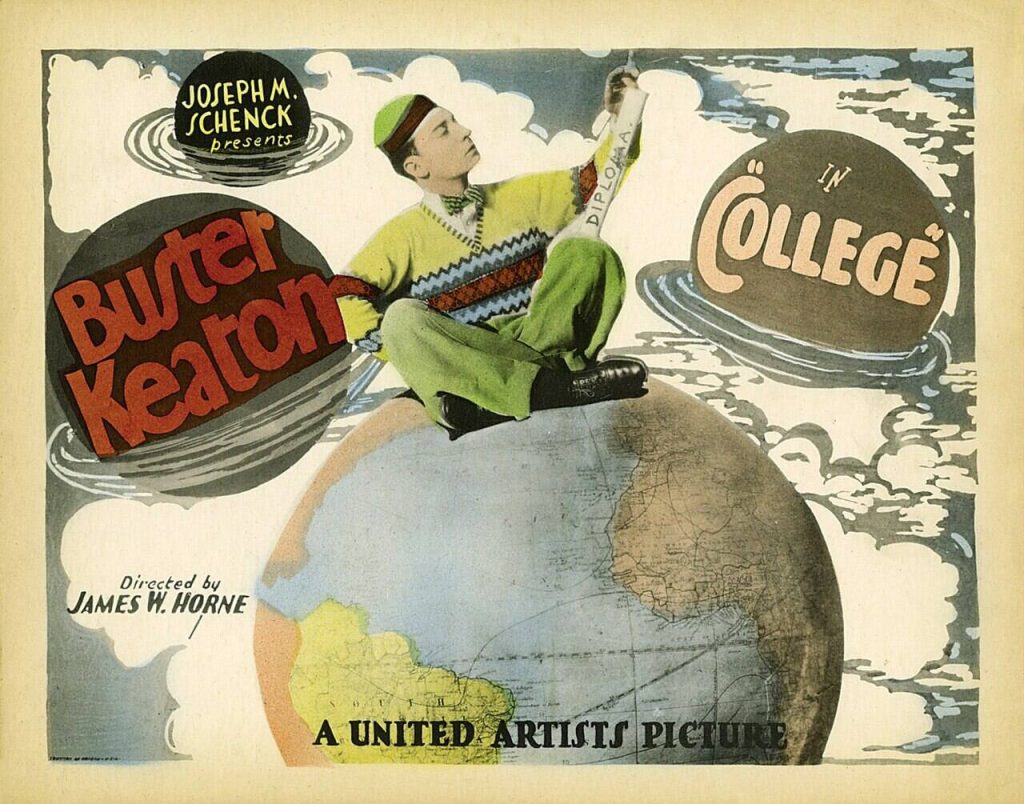
On April 29 and 30, 2026, Guarneri Hall favorite Stephen Prutsman once again combines his musical sense of humor with Buster Keaton’s outrageous visual comedy in a brilliant original score for Keaton’s 1927 silent film College. Matching each of Keaton’s crazy stunts and misadventures with a musical counterpart, an ensemble of players led by Prutsman at the piano will accompany the film in real time.
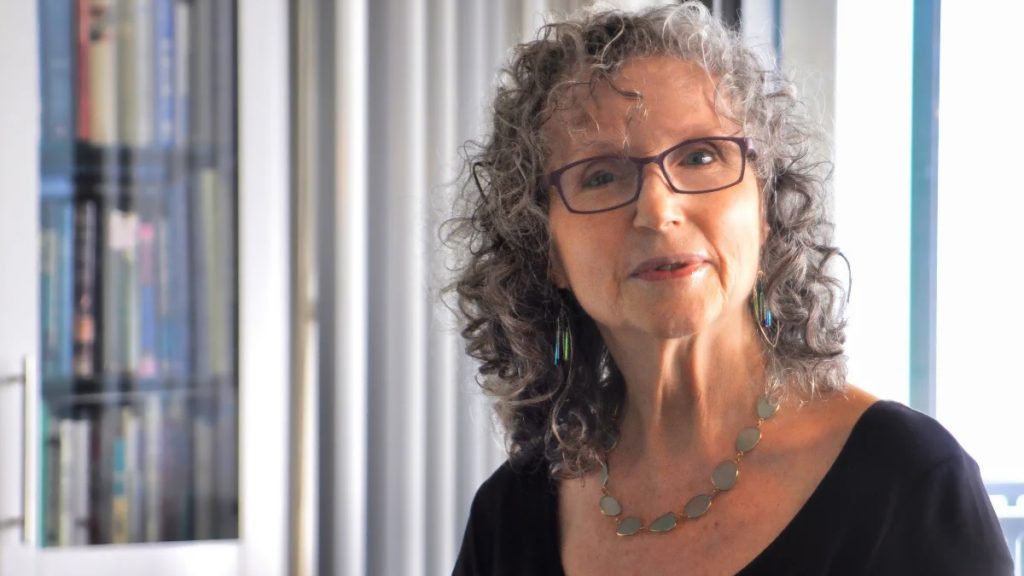
Stephen Prutsman has been described as one of the most innovative musicians of his time. Moving easily from classical to jazz to world music styles as a pianist and composer, he has performed as soloist with many of the world’s leading orchestras. His works and arrangements have been performed by such diverse artists as the Kronos Quartet, Dawn Upshaw, Yo-Yo Ma, Tom Waits, and Jon Anderson of the progressive rock band YES.
Steve and I had great fun talking about his upcoming shows at Guarneri Hall.
LINDA BERNA: We’re really looking forward to College. You’ve written music for more than 15 silent films now, isn’t that right? What has been your most challenging one?
STEPHEN PRUTSMAN: It was, no doubt, F.W. Murnau’s Sunrise: A Song of Two Humans. It’s the only real dramatic silent film that I’ve scored. It’s so beautiful to watch, and it possesses a level of seriousness for a silent film that I hadn’t really experienced before.
You know, though, I take the craft of writing for comedy very seriously. I do my best to make the score as interesting as possible, as a musical piece. What normally will happen is somebody improvises behind the film, which is more of a sound coloring that is based on what they see at any given moment. There’s not a whole lot of planning, just kind of rambling for an hour or so. My take is that everything is through-composed, because in order to work, it’s got to have some kind of structure.
I’ve been having leitmotifs, little recurring themes, appear throughout these comedies, because they all have a similar storyline. You have your hero, Buster Keaton, and the pretty heroine, but there’s some obstacle for him in gaining her affection. In Sherlock Jr., he was a movie projectionist who got framed for stealing some jewels. In College, he’s a bookworm, a nerd as we would say, but the athletes get all the attention. Of course, the girl goes with the athlete, so he’s got to prove his athleticism in some way. You can easily throw in a heroic theme for Buster, and a love theme for the appropriate moments. Kind of like what Wagner did in his operas!
LINDA: I was going to ask you about the role of repetition in composing music for a film.
STEVE: It’s interesting, because for concert music the rules really change. There you need some quick transitions, partly because of our attention span, but even more because if there’s the same thing over time, without any kind of visual image, the listener’s expectation is, okay, well, now what? Whereas if there is a visual, the same thing over time can enhance what’s happening in the movie. The short answer is I’m still learning. I tend to overwrite, meaning I get a little too busy, with too many elements. You know, often great scores are just a chord for 30 seconds, followed by a subtle change. And it depends on what’s happening in the music. With dialogue, you must be super careful scoring under it. In that case, the more repetition, the better, maybe some kind of short, repeated passage happening under an important conversation, maybe just a series of repeated chords.
LINDA: If you watched Succession, you know the truth of that.
STEVE: That’s a great progression. It’s a paraphrase of Beethoven, the Succession theme. But it’s a good one. Back to my most difficult project, you can’t really repeat like that in a drama. I mean, the whole comedy schtick is here’s the love theme, here’s the chase, but in real drama there is plot development, so that was the most tough.
LINDA: Silent film relies so much on gesture and facial expression, both really exaggerated. I would think that those would be good cues to suggest musical ideas.
STEVE: Well, the obvious example is slapstick. That has a lot of what they used to call “Mickey Mouse” moments. “Mickey Mouse” moments would be where you do a giant glissando, swooping down as he falls down. You do have to do those things sparingly. I tend to do too much and then I have to go back and cut them out, because they’re not funny the second time! Myself and all the different people I work with on these projects — we have fun finding those moments. Musicians will continually ask, “Can I do this?” For instance, make a funny sound when something good or bad happens. And we use it if it works. But you wouldn’t do it more than once. All that “Mickey Mouse” stuff makes it easy during editing, because the hit points have to be right there. You can’t fall and then have the glissando!
Sometimes it’s good to put in little musical jokes, innuendo that refers to what’s happening on screen. Throw in a quote from a popular song, or have the one of the musicians sing a line about something that he’s actually looking at. I have fun using famous and not-so-famous quotes by other composers here and there.
LINDA: Isn’t that how they used to put together the cue sheets that would tell you how to accompany silent films? There would be a list of cues, and they would say at 2 minutes, play “Ase’s Death” or something, and at 3 minutes, play “Hearts and Flowers.” There would be a whole plan made from little bits and pieces of other music which became the score.
STEVE: It is, exactly. It’s basically a medley. They would say, do this for a while until you see the airplane roll over, and then jump into a march. They would use well-known music like Chopin’s Funeral March. That’s been played a billion times in silent films when somebody dies! It works because everybody knows it. The studio would send the reel out probably on a Friday, so it’d be there by Tuesday, say at a cinema in Des Moines, Iowa. In the reel, there would be these instructions for the accompanist. They’d just use music that everybody knows. Then, of course, the accompanist would improvise on that too!
LINDA: That’s hard, though, if you’re doing it just as you’re first seeing the film.
STEVE: One old-timer told me that years ago, everybody knew to come to the movie three or four days into the run, because by then, the accompanist knows the movie, so it’s going to sound better!

LINDA: Playing in theaters was once a real job in the film industry! Bigger theaters had orchestras, some quite large, and there was always an organ or a piano in the theater. In the old days at the conservatory where I worked, you could even earn a certificate in theater organ. Back in the 1920s they offered courses teaching the skills to do this at Chicago Musical College, which is now part of Roosevelt University. I saw it in their old catalogs! There were even textbooks. I saw one that was called “Showmanship and Synchronization.”
STEVE: That is indeed the art of doing what we’re talking about. Seeing it for the first time while looking at the cue sheet, usually they’re craning their neck, looking up and trying to see what’s next. Did I miss something? Did they do the love bit yet? But then they would quickly adapt, and maybe do something interesting to complement this new movie. That is one approach. Even today, at silent film festivals, most of the time they’re making stuff up. It’s like rehearsing for an avant-garde jazz show; you don’t know what’s going to happen. That’s a different way to go than to actually compose every note for a silent film score. A very different product will result from each of those camps.
Coming back to the idea of repetition in a through-composed film score, I think of my friend Osvaldo Golijov, who used to be a composer-in-residence at the Chicago Symphony. I’m always astounded at how well he paces a movement. His sense of how to hold everything together, when to morph to a different sound, when to stay with something, it’s amazing. So, I try to adopt that for the visuals of silent film. There are visual points here and there and you need a trajectory to get from one to the next, perhaps getting more exciting or bigger. I try to structure things that way, instead of repeating something without anything new happening. It makes it more interesting not just for the audience but for the players, too.
LINDA: Have you ever scored any sound films?
STEVE: I never really got into that world. Partly it’s because I’ve never lived in Los Angeles, except for one year at UCLA. The film scoring profession is made up of either people who are boots on the ground there, and a lot of really good people do that, or popular artists like Nine Inch Nails who have done great soundtracks like Gone Girl and The Social Network. A long time ago I did a commercial for a Japanese whiskey company. And the silent film writing has come along gradually. Every year I lead a series in St. Paul of new music for silent film. I’ve been working also to get other people to write for that medium.
LINDA: Debussy, who didn’t write any film music but loved technology and loved silent film, wrote that film music would be the savior of symphonic composition. He criticized the symphonic composers of his day for not paying enough attention to the beauty of the seasons. I think what he meant was lack of attention to change and to color. And he said, the cure for that would be film music. That would save us from boredom.
STEVE: So he would bring together visuals and music. I like that, he’s so ahead of his time. I think also of Scriabin, who wanted an immersive experience with sights and smells. And there is no doubt why Debussy would say that, because his own music is so evocative and cinematic. I just marvel that he would see that far into the future. Certainly, we’re there now with popular music. Unless it’s an open mic, where you just do your thing, every popular music event has some visual component. Otherwise, it’s not a show. The question is why traditional Western art music has still not embraced the potential for a visual component.
The well-known film scores of today, for example. are typically not great as concert music. I think it’s because to be able to complement a story that’s visually inspiring, with lots of storytelling through words, the composers have learned the art of not getting in the way. and not challenging too much, musically speaking. But if you’re sitting at the Kennedy Center listening to that music in concert without the visuals, bring a book or something…
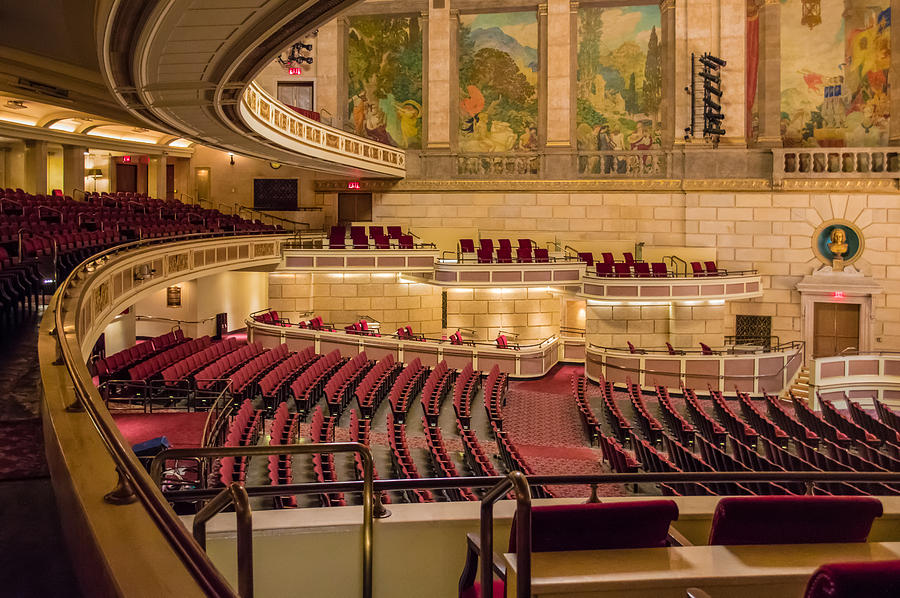
LINDA: The weekly newsletter from Musical America Worldwide always includes a piece that appeared in the magazine 100 years ago. Last week’s was an article about the Eastman Theater in Rochester, New York, which was a prominent venue for live performance and cinema in the 1920s. The theater’s director tells young composers to write film music if they want to be heard by thousands of people, because they have little hope of ever having their pieces performed by a good symphony orchestra. He even gives them a strategy, just like the one you described: compose short bits that portray specific moods, some cheerful, some sorrowful, some exciting, and then just put them all together.
STEVE: Wow, so you would have your own reel, as they say. It’s interesting that there would be people promoting that idea before its time. It’s what you do now. Some composers like Korngold did it right for both film and concert music. He’s my favorite movie composer of all time. He set the bar very high for us to reach, especially when there’s a lot of action, like in The Sea Hawk. There’s all this action and not so much dialogue, so he can go for broke! He makes sure that the story is told and the music even though it’s wild and flashy doesn’t get in the way. But his music, for instance the Violin Concerto, works in concert and his film scores work on the screen, and that’s pretty impressive.
LINDA: The thing about music for silent films is that mood and music are deeply interconnected.
STEVE: I definitely feel that way.
LINDA: Do you find that younger composers are interested in this kind of composition?
STEVE: Yes, the ones that I’ve worked with. You have to give them the opportunity for a performance, and once they do it, they find that it’s thrilling. It is a bit of a niche, though, at least right now. I’m looking forward to the time, hopefully in a year from now, when all of the scores we’ve done become a kind of a startup kit and would be available for people to present them on their own. That’s the next stage. I don’t need to be there, and I’d love it if people could get together and do them just for fun, just like they would do in the 1890s, reading piano duet transcriptions of the latest symphonies.
LINDA: Can you share something about your latest projects?
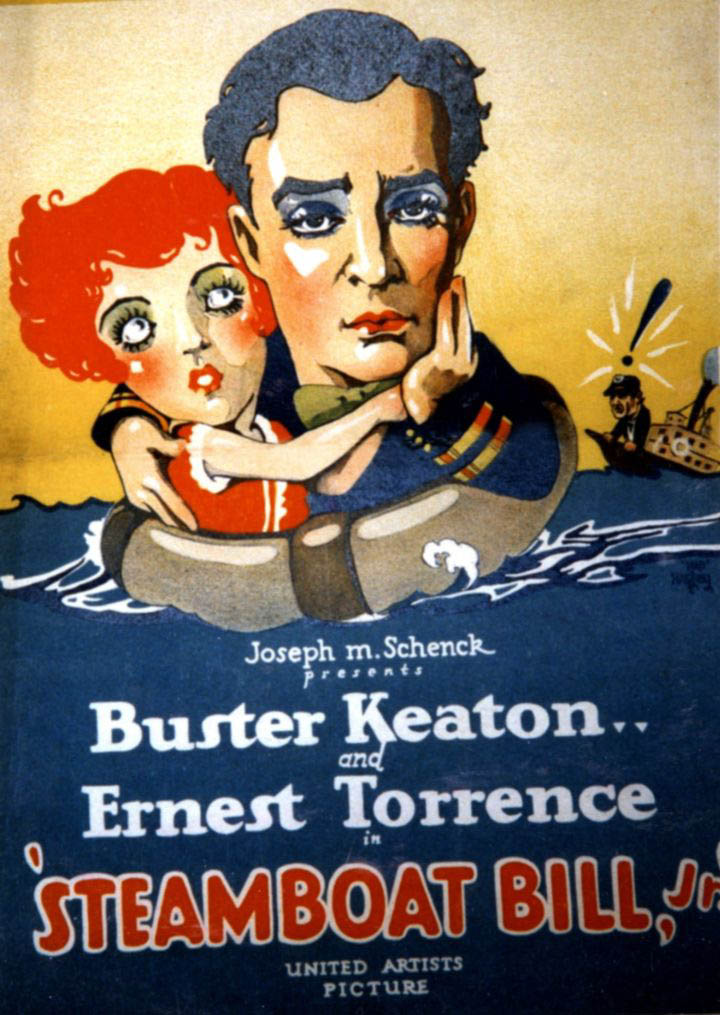
STEVE: I’ve just scored two new silent films. One premiered in Madrid, and one in New York, and then I have my annual festival in St. Paul next month where I’m playing one of them, Steamboat Bill. Also coming out next month are recordings of my orchestrations of Prokofiev’s solo piano music that I made for the St. Paul Chamber Orchestra. And the Spoleto Festival in Charleston is releasing their recording of Sherlock Jr. on their YouTube channel as an exclusive benefit for their donors. It’s a good recording that will start populating that library with these projects.
I really love the idea that this is entertainment that’s interesting, it’s funny, and it’s for adults and young people to enjoy together. I’ve had a lot of great experiences in the past presenting silent movies with music for family groups and autistic folks as well. There’s something freeing about having a lot of racket out in the audience with the music and visuals, and you can still follow what’s going on. It’s fun! Best of all, nobody’s shushing anybody. I feel it’s what the original presenters envisioned. It’s not an abstract trope about the good old days or “family values,” it’s the reality of human contact, people having fun in a social environment, and that’s always a win.
LINDA: It’s going to be fun having you do your silent film thing again at Guarneri Hall, and I hope you are excited about it as well.
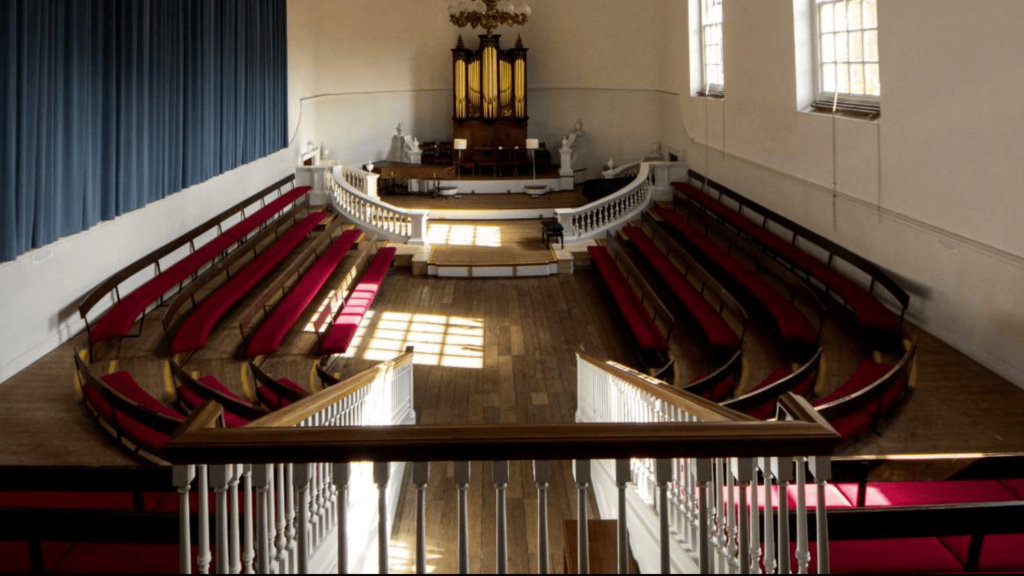
STEVE: Oh, I am. The hall is such a lively place, with all the great history of those extraordinary instruments in that building, and the talented folks that come to play this music, and the amount of fun we all have in the end. Because that’s what these movies were intended to do!