
Much has changed in the world in the nearly two years that have passed since Guarneri Hall tapped composer Paul Novak to compose a new piece for the Formosa Quartet’s American Mirror Project. Paul’s comments about the challenges of the project reveal insights about his creative process and the inescapable impact that current events have on artists as they work. Paul also shines a light on the Formosa Quartet’s innovative efforts to engage with and incorporate a broad representation of America through their work as a musical ensemble.
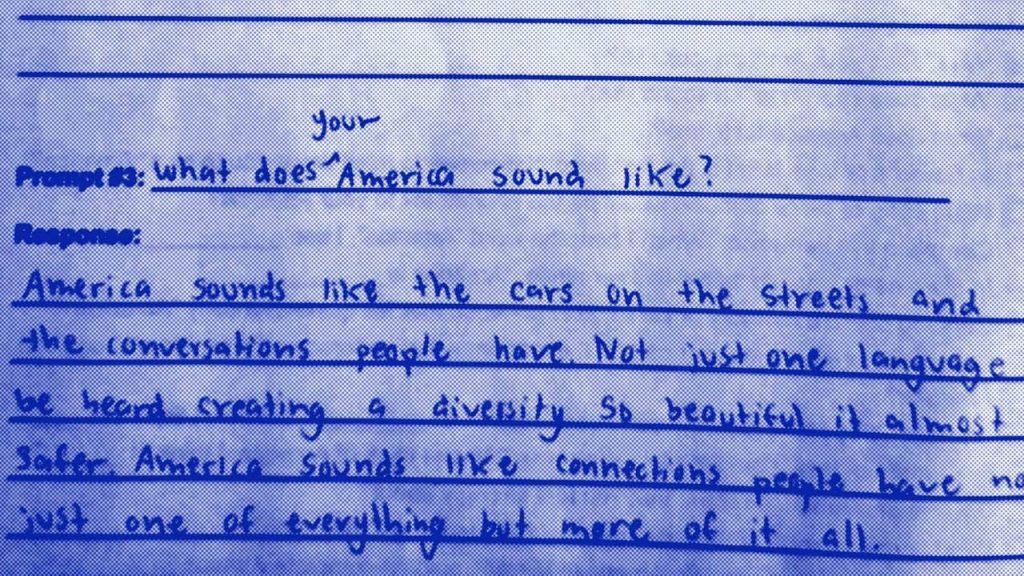
Just as the written contributions from community members speak poignantly to our times, Paul’s story below brings home how timely and relevant this project is today in ways that were unimaginable just months ago.
–Stefan Hersh, Artistic Director
This creative process for composing every song has an unsung third stanza began the same way it does for most of my work: in conversation with my collaborators. Over a year before I started writing any of the music, I began to meet regularly with the Formosa Quartet and the Guarneri Hall team. Our conversations in these meetings were wonderfully exploratory and open. I remember us talking not just about logistical considerations (how would we identify the speakers for this project?) and creative considerations (how would the piece be structured) but also more broadly about community and American identity.
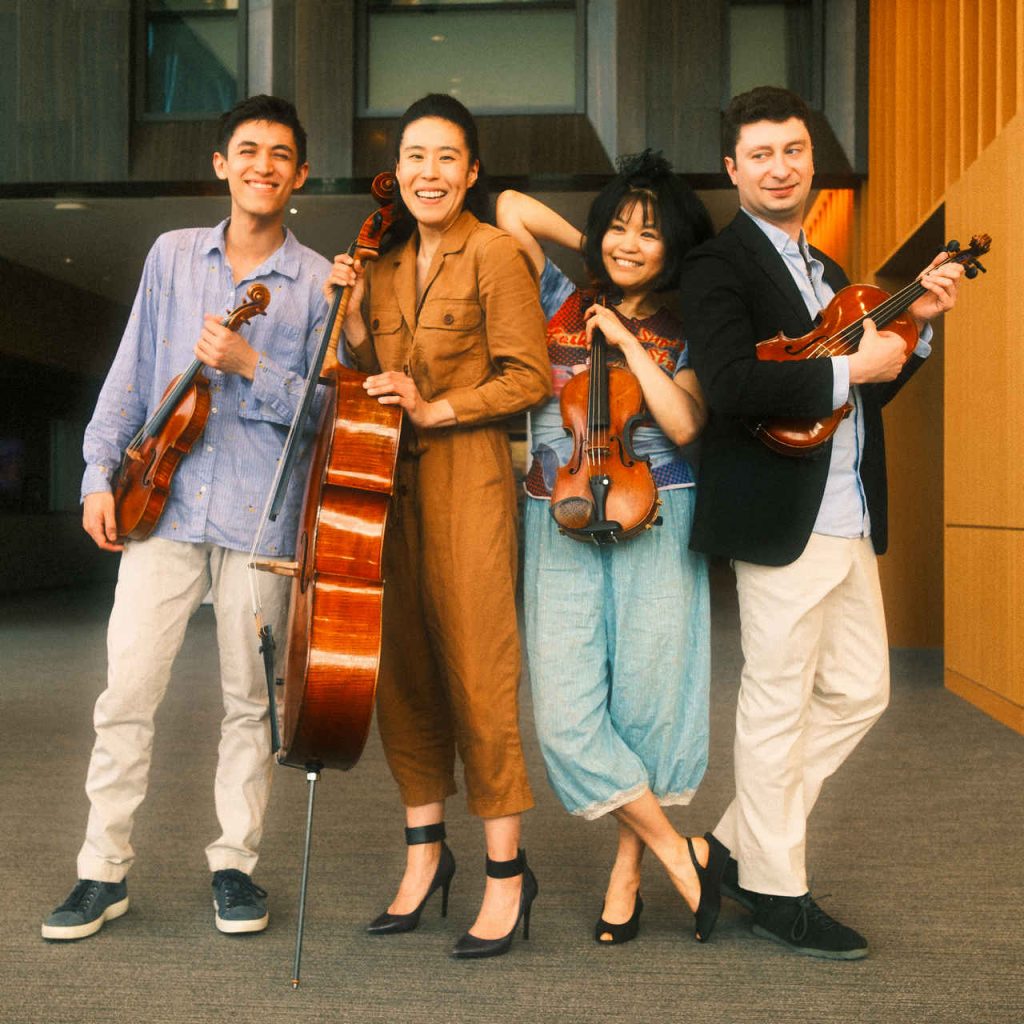
I remember being moved by the Formosa Quartet’s commitment to centering the voices of the communities they perform in, and I remember saying that I think a string quartet and a democracy have a lot in common. There’s an idea that a composer will begin a piece with a singular, genius musical vision, and that it’s the job of performers to just enact that vision. However, for me it’s much more common for a new piece to emerge gradually over the course of conversations and workshops with my collaborators. Their personalities and identities and ideas become an important part of the piece. (In fact, this is one of my favorite parts of being a composer).
I wrote the actual music of the piece almost entirely at a small artist residency in Connecticut nearly a year later in Fall 2025. The piece was also shaped by conversations and relationships with a diverse group of other artists from around the world there. The other artists there helped me pick on the piece’s title, which paraphrases a line from Ada Limon’s poem “A New National Anthem.” During that time, I also shared ideas about the structure and musical material with the quartet, and their ideas and thoughts as I was in the process of writing were very helpful.
My Own American Mirror
It’s impossible to separate this piece from the context it was written in. I wrote this piece in the fall of 2025, during the period of several weeks when ICE was terrorizing Chicago—but I wasn’t there. I was at an artist residency in New England, walking through the woods to write music in my studio every day. Meanwhile, unmarked vans were kidnapping children and there was tear gas in the streets and a man was abducted in the alley behind my apartment building.
I remember feeling such an intense sense of helplessness and guilt. Meanwhile, I was talking every day about this with other artists who were there, who were from all over the world. Right as I returned to Chicago and was finishing the piece, I went to a demonstration at the Broadview ICE facility which was by far the most intense protest experience I’ve had. So this is just to say that while the music of the quartet itself is often lyrical and dynamic, I do think there is a deep anger that runs through this piece too.
Imagining Words and Music Together
Incorporating spoken words was a special challenge! The piece needed to be super flexible: it had to work with any number of speakers, whose contributions could be any length and have any emotional or narrative tone. The music had to foreground the speakers and never overshadow their words; but I still wanted it to feel like chamber music, with all of the musical excitement and interplay that comes with the genre.
For me, one of the goals when composing anything—and especially chamber music—is to hold the audience’s and musician’s attention for every moment. I like music that is continually reinventing itself, that immerses you in a world that is dynamic and beautiful and full of surprises but where every decision still feels inevitable. I also wanted a real intentionality to the form, so that the piece could work in a lot of different contexts—but I didn’t want to prescribe anything about the content of the submissions or make it so the speakers needed to read music.
My solution was a structure that alternates between spoken sections and musical interludes. In the spoken sections, the quartet vamps a section of the music that is more static and repeating, a backdrop for the spoken words. Each spoken section has a different character, I provide adjectives (e.g., solemn, reflective, playful, energetic, perhaps humorous, etc.) as a way to give guidance for pairing the submitted texts with each section of music. The musical interludes are much more dynamic and full of surprises. I wanted the piece to still have moments where the quartet can engage the audience’s full attention without overshadowing the speakers. At the very end of the piece, there’s an optional section where the members of the quartet can read anonymous submissions, or their own American Mirrors.
To the Listener
every song has an unsung third stanza is really a piece that is about conversation. It’s a piece with a big range of characters and moods, where the speakers and quartet are in dialogue and where the quartet is also constantly conversing with each other. Mostly they echo and mimic each other and argue in all sorts of different ways, but near the end of the piece, they finally play entirely together.
Ultimately, the most important thing you can listen to is the words and perspectives of the speakers. This piece was written to foreground them. To me, it will have succeeded if the music dramatizes and amplifies their words without ever distracting from them.
every song has an unsung third stanza, Paul Novak’s new work, will receive its world premiere as a part of the Formosa Quartet’s American Mirror Project in Guarneri Hall on March 26 and 27.