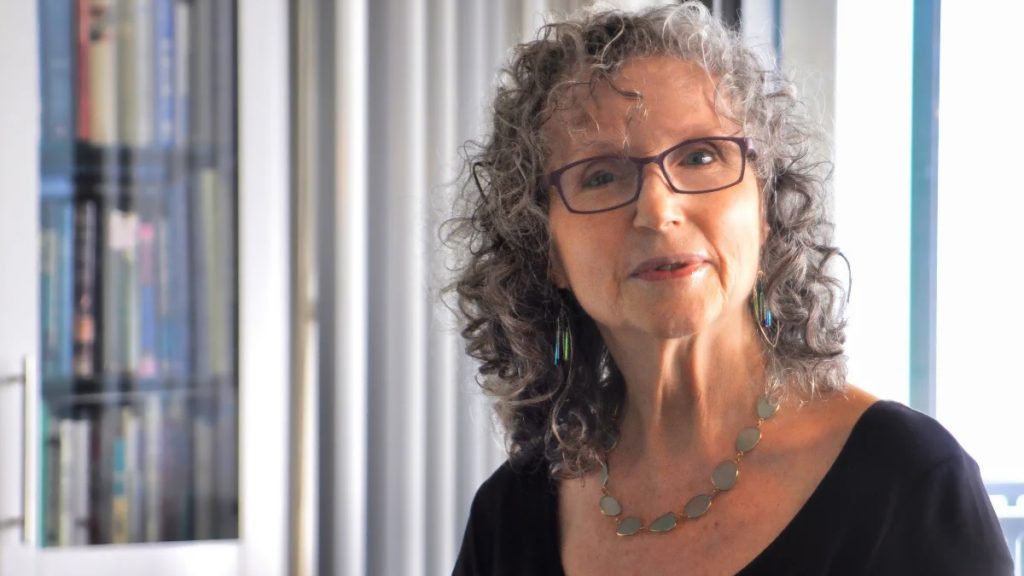

I was first introduced to the recordings of the Quintet of the Hot Club with their intoxicating “yin-and-yang” effect of Django Reinhardt (1910-1953) and Stéphane Grappelli (1908-1997) as an aspiring teenage classical violinist in mid-1970s San Francisco. As with so many fans before and after me, the band’s propulsive rhythmic energy, Django Reinhardt’s improvisational virtuosity, and Stephane Grappelli’s stylish grace made a deep impression. This music has had a place in my heart ever since.
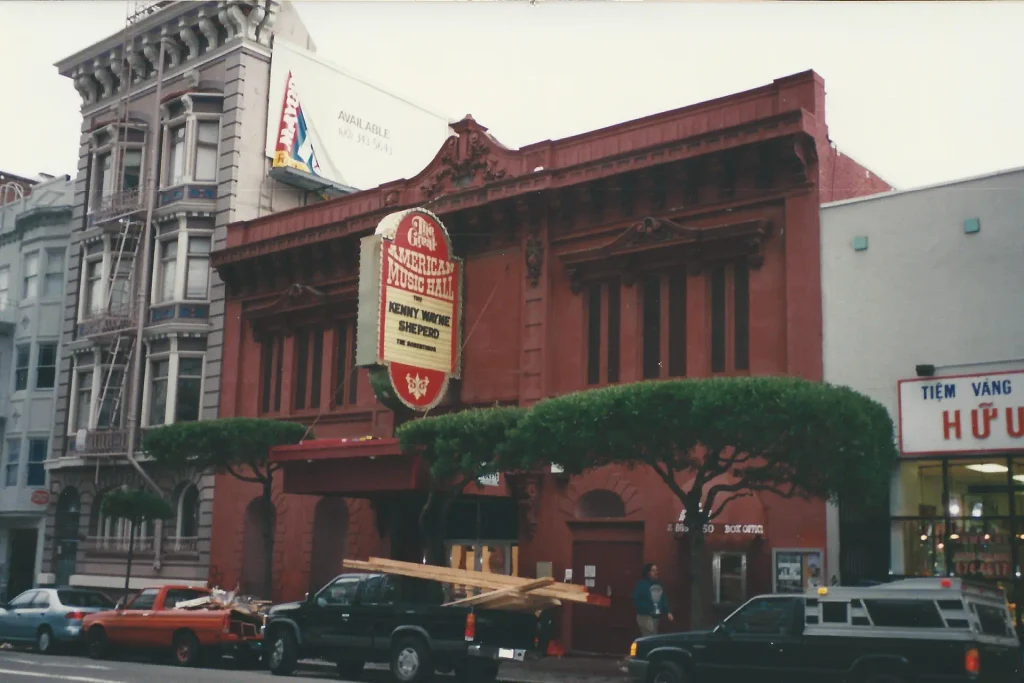
Reinhardt had died in 1953, long before I was born, but Grappelli enjoyed a much longer career, continuing to perform right up until his death in 1997. In 1976, when Grappelli came to play at San Francisco’s Great American Music Hall, I nearly burst with excitement at the chance to hear him live! The then-68-year-old Grappelli was in great form. His shimmering technical prowess and wide expressive range blew me away. When he came back to San Francisco in 1979, I again enjoyed his live show and, this time, was able to meet him backstage briefly with a lineup of fans. He greeted all of us with the usual backstage pleasantries but nothing personal. The next day, I happened to be visiting the local violin dealer, Frank Passa, when Grappelli walked in and greeted Passa like an old friend. Here Grappelli was warm and conversational, which gave me a chance to ask him about the other hero of the legendary Quintet of the Hot Club: Django Reinhardt.
To my surprise, rather than launching into conversation about the music-making, Grappelli regaled us with humorous stories about the lengths that he and the other members of the quintet went to in their ongoing efforts to minimize Django Reinhardt’s notorious unreliability. We heard stories of tracking down Reinhardt at a card game, just minutes before a gig was to start. Or how they would always keep an extra pair of black socks on hand because Reinhardt would often show up wearing red or white socks when the dress code was firmly all black. Grappelli, a soft-spoken man, delivered it all with a very French air of, “but of course he was a truly fabulous genius…” It had been 30 years since they had last played together in 1949. As Grappelli spoke of Reinhardt’s practical shortcomings, it was evident that he still revered the incredible artistry of his one-time musical partner.
Birth of a New Sound
Before Django Reinhardt, the guitar served primarily as a rhythm and accompaniment instrument in jazz and popular music. In the 1930s, Reinhardt dramatically reshaped its role as a lead instrument, helping to establish the guitar as a major voice for virtuoso jazz improvisation and profoundly influencing the instrument’s role in the genres that followed. What came to be known as “Gypsy Jazz,” or “Gypsy Swing,” owes both its existence and much of its enduring popularity to the extraordinary five years leading up to World War II, when Django Reinhardt and the Quintette du Hot Club de France reigned supreme. The lineage of the guitar as it is known across many genres today can be traced, in significant measure, to the pioneering innovations of Django Reinhardt.
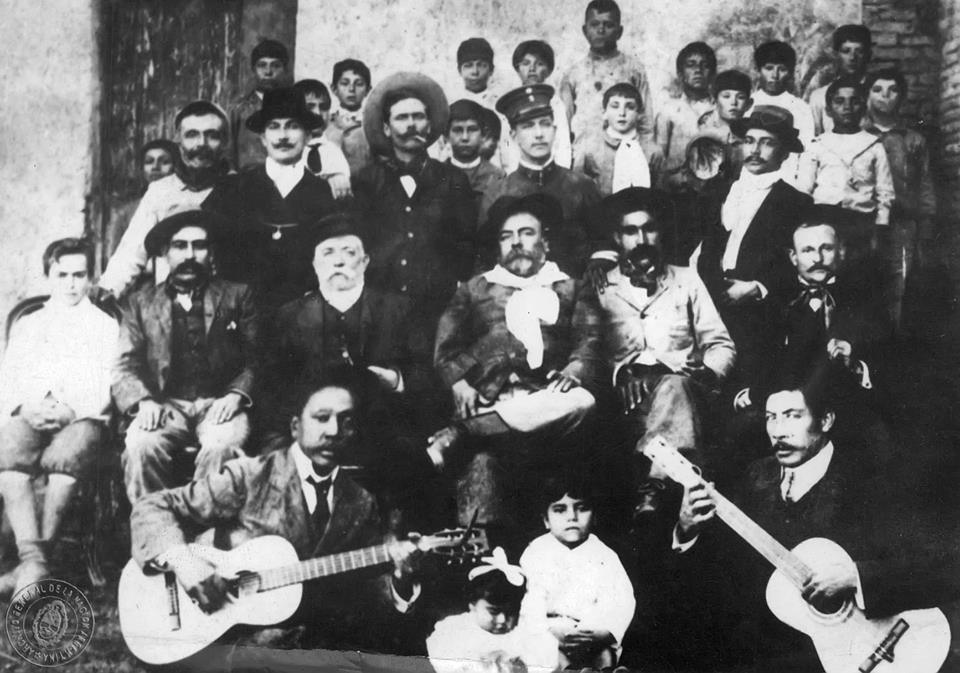
Django Reinhardt’s name at birth was Jean Baptiste Reinhardt. He was born in Libérchies, Belgium, in 1910, to a nomadic Manouche Romani family. Reinhardt’s father was a basket weaver, juggler, and multi-instrumentalist; his mother was a dancer. Reinhardt was nicknamed “Django” early. Reinhardt’s father deserted the family, and Django’s mother kept them on the road, using the outskirts of Paris as a winter base. Though he was enrolled in school twice, Reinhardt never received a formal education.
The Musette style
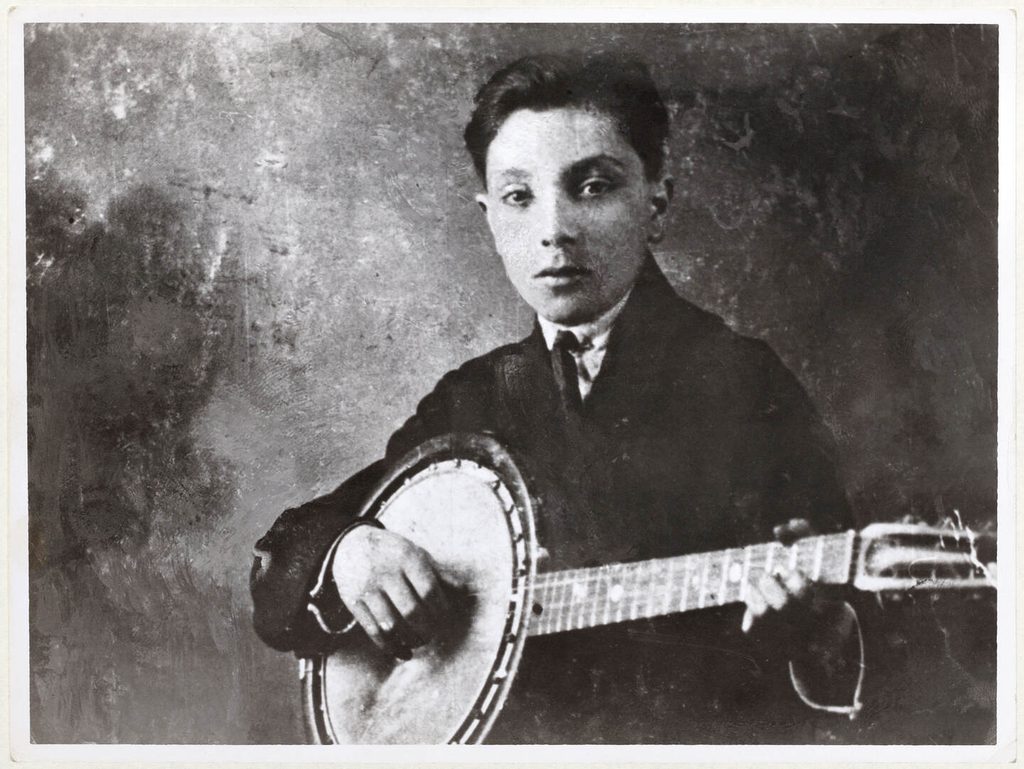
His father, his uncle, and the rest of the Manouche Romani he traveled with taught young Django the violin, and by the age of seven he was sitting in with his father’s dance band. At age 12 he was given a six-string banjo and gained proficiency quickly. Soon he was playing in Paris dance halls and cafes. By age 17, as an accompanist to solo accordionists Maurice Alexander and Jean Vaissade, Reinhardt was playing tangos, polkas, waltzes in the Musette style, in sets that included the new American style, jazz. Django excelled and drew the admiration of all who heard him.
Opportunity and Adversity
By October 1928, word of the young phenom had traveled. The well-known English bandleader Jack Hylton came to a dancehall in Paris’s Belleville quarter to hear the teenager for himself, and offered Reinhardt a job on the spot. But fate intervened: one evening shortly after, the caravan where Reinhardt lived with his pregnant wife, Florine “Bella” Mayer, caught fire, leaving him badly injured.
Reinhardt was hospitalized for 18 months with severe burns, including the fingers of his left hand. He narrowly escaped losing his right leg altogether, but was later able to walk with a cane. His brother Joseph gave him a guitar to play while he was bedridden, and as he convalesced, Reinhardt developed a technique for a left hand with immobilized third and fourth fingers. He devised special chords to fit his new constraints. He mastered crawling up and down the fretboard in melodic passage work rather than crossing strings, literally re-inventing what could be played on the guitar. This new approach, and the distinctive sounds Reinhardt pioneered, would indelibly influence guitar playing across genres for generations to come.
A Meeting of Minds
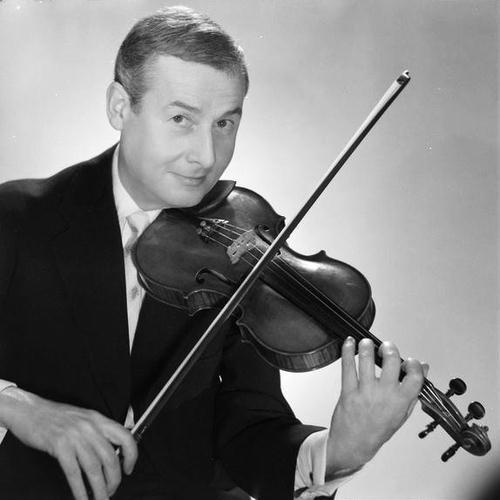
Stéphane Grappelli meanwhile, had cut his teeth as a violinist in the Paris cafe scene in the late 1920s. He had heard Django Reinhardt in Paris, but the two had not met. In 1931, Reinhardt was impressed by Grappelli when he heard him playing with a band called Gregor and his Gregorians, at “Le Croix du Sud” club in Montparnasse. By 1933, Reinhardt and Grappelli were playing together in a band led by bassist Louis Vola at the Hotel Claridge in Paris. At between-set jams backstage, the two began to explore their unique musical chemistry. Grappelli was initially wary when Reinhardt invited him to form a band, in part because he was reluctant to give up his steady gig. But the pull of their synergy in performance and their shared interest in musical innovation must have created an irresistible artistic attraction between them.
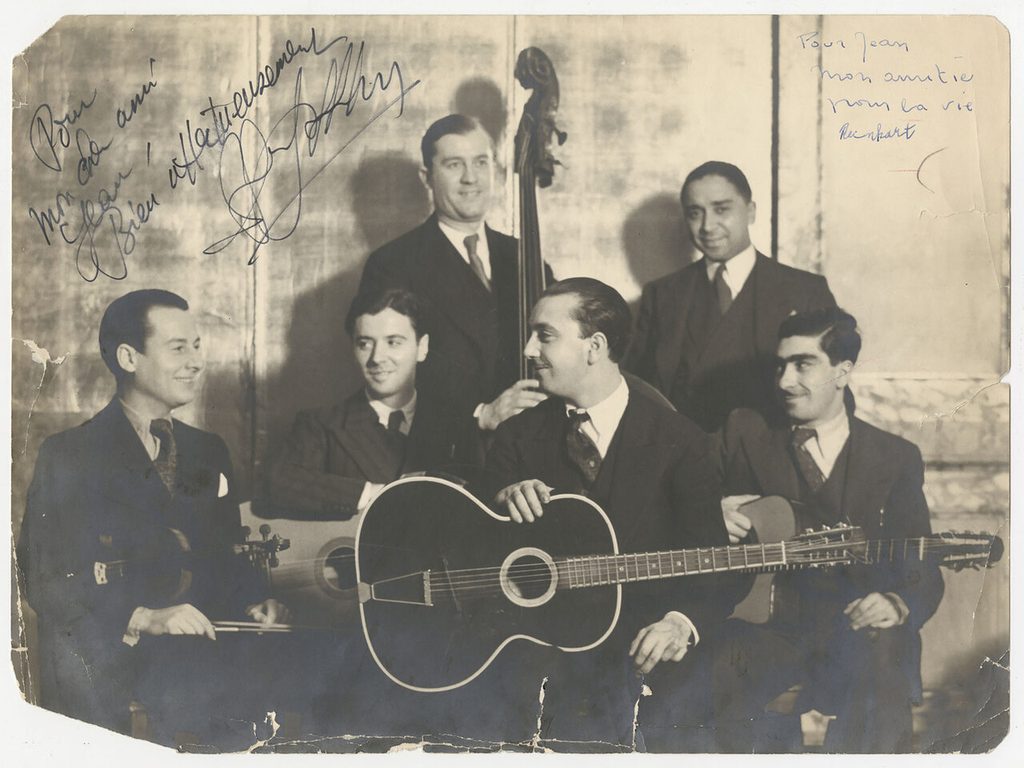
Reinhardt and Grappelli formed a quintet in 1934 under the sponsorship of the Hot Club de France, at the urging of French jazz critics Hugues Panassié and Charles Delaunay. Bassist Louis Vola joined with guitarists Joseph “Nin-Nin” Reinhardt and Roger Chaput. After a highly successful initial performance, the band officially adopted the organization’s name and performed as the Quintette du Hot Club de France for the first time in February 1935. The quintet pioneered the style known as jazz manouche (Gypsy Jazz), achieving a propulsive “hard-swing,” rhythmic energy without brass instruments or drums–an unprecedented musical revelation at the time.
An Overnight Sensation
Spurred by their initial success, the Quintette du Hot Club de France began recording and touring Europe, adding Django Reinhardt’s compositions to their repertoire alongside American standards. The Quintet also played and recorded with American musicians such as Coleman Hawkins, Benny Carter, Rex Stewart and Louis Armstrong. In 1938, they produced a short promotional film designed to introduce their unique style to British audiences ahead of a tour there:
The Quintet was on tour in the United Kingdom in 1939 when World War II broke out. Grappelli chose to remain in London, while Reinhardt returned to France. Grappelli and Reinhardt maintained a close relationship and corresponded frequently through the war years, but their physical separation brought the end of the first iteration of the Quintette du Hot Club de France. Reinhardt continued to work in Paris, replacing Grappelli’s violin with a clarinetist, usually Hubert Rostaing and eventually adding a drummer.
The King of Swing Guitar
After the war, in 1946, Duke Ellington invited Reinhardt to tour the United States with his orchestra, billing him as the “king of swing guitar.” Initially excited by the opportunity, Reinhardt soon became frustrated by his limited role in Ellington’s band. Nevertheless, he was warmly received in the United States, highlighted by two wildly successful nights at Carnegie Hall, and his long-term prospects appeared promising. But the hoped-for opportunities failed to materialize, and Reinhardt returned to France in 1947. He and Stéphane Grappelli reunited several times for recordings and tours between 1947 and 1948, but nothing developed into a lasting collaboration. By around 1948, the Quintette du Hot Club de France had finally and permanently disbanded.
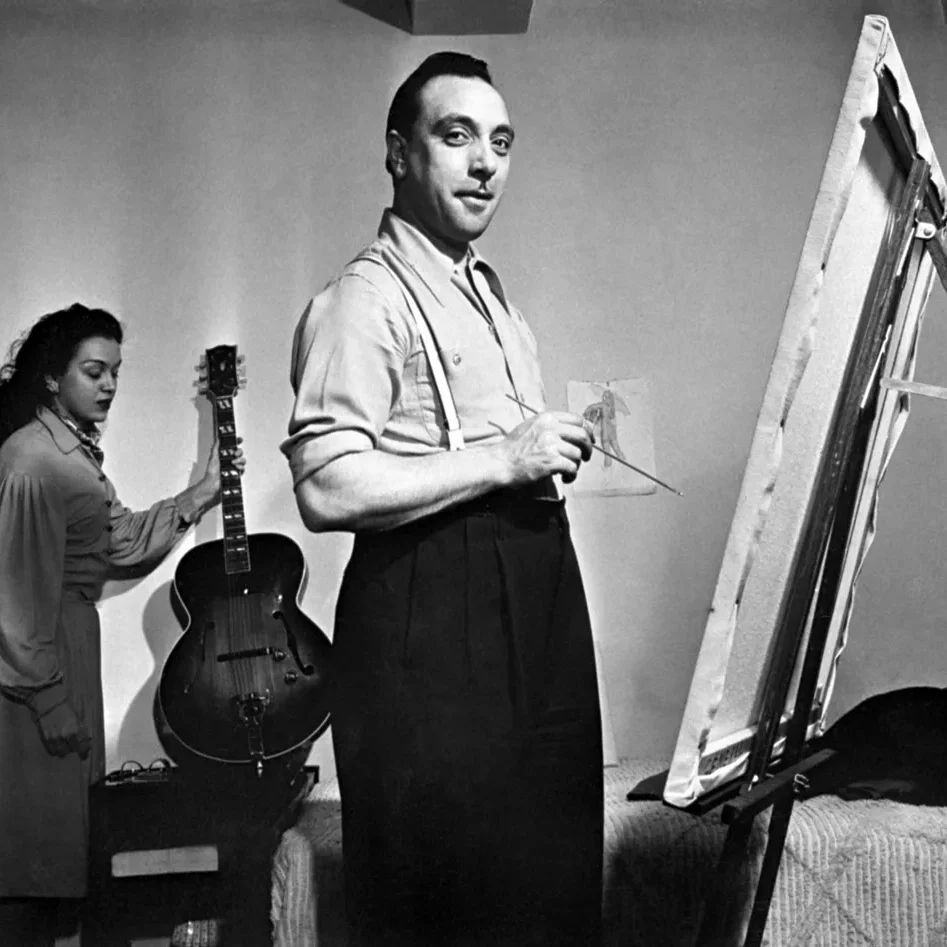
In America, jazz was undergoing radical transformations in the postwar years as fast, complex bebop overtook the swing style of the previous decade. The style of the Quintette du Hot Club de France had become an anachronism. Reinhardt struggled to adapt and became disillusioned. He largely retreated from performing, instead dedicating much of his time to painting rather than playing guitar.
In 1951, Reinhardt began performing again, adopting more of the new bebop style and playing with a younger generation of jazz musicians, even trying his hand at electric guitar. These collaborations produced remarkable renditions of his compositions, “Anouman” and “Nuages,” recorded in 1953.
In May of 1953, Reinhardt returned from a tour in Switzerland complaining of headaches and numbness in his arms, but refused to see a doctor. On May 16, 1953, while on his way home from a Paris gig, Reinhardt collapsed with a cerebral hemorrhage. He was pronounced dead on arrival at the hospital in Fontainebleau at just 43 years old.
Rediscovery

Stéphane Grappelli’s career languished until the mid-to-late 1960s, when appreciation began to grow for Django Reinhardt and the Quintette du Hot Club de France. A new generation of musicians and audiences began to discover and appreciate the infectious rhythmic energy and stylish virtuosity of Reinhardt, Grappelli, and the Quintette du Hot Club through the re-release of old recordings. In 1973, British guitarist Diz Disley convinced Grappelli to perform with an all-strings jazz group inspired by the Quintette du Hot Club de France. The initial gigs were a success, and Grappelli proceeded to tour and record with this kind of ensemble during the 1970s. A major revival of “Gypsy Jazz” was gaining traction, with musicians like Fapy Lafertin, Raphaël Faÿs, and Biréli Lagrène leading a surge in the popularity of “Gypsy Jazz” as a subgenre of “Swing Jazz.”
Today, tributes to the Quintette du Hot Club de France are common and popular. Virtuoso guitarist Stéphane Wrembel is the modern heir to Django Reinhardt’s “Gypsy Jazz” legacy. Chicago audiences will have the opportunity to experience the energy of “Manouche Swing” and the virtuosity of one of today’s most admired guitarists close at hand when Wrembel performs at Guarneri Hall on September 24th and 25th, 2026.