
The turmoil of post‑Revolution Russia marked Dmitri Shostakovich’s student years at the Petrograd Conservatory as he developed into one of the 20th century’s defining modernist voices. In the face of innumerable hardships, he still managed to produce groundbreaking music. Shostakovich’s Two Pieces for String Octet, Op. 11, bear witness to his metamorphosis from conservative traditionalist to edgy modernist. Its two movements are considerably more sophisticated than the music that precedes them and are arguably the best early example of the composer’s emerging modernist voice.
A Harsh Existence
Dmitri Shostakovich (1906-1975) first enrolled at the Petrograd (now St Petersburg) Conservatory in 1919 at the age of 13, remaining there until 1925. Conditions were far from ideal; the Russian Civil War (1917-1923) created shortages of food and fuel that left classrooms unheated and students underfed. Fortunately for Shostakovich, Alexander Glazunov, the director of the conservatory, recognized his genius. Although a critic of emerging modernism, Glazunov was a fierce advocate for artistic freedom and did what he could for Shostakovich by arranging for additional food rations and a small stipend.

However, these extras weren’t enough to make Shostakovich’s life comfortable. Poor nutrition and multi-mile daily walks to class through freezing cold conditions took their toll on Shostakovich. He developed a severe case of lymphatic tuberculosis that would plague him for the rest of his life. Worse still, in 1922 Shostakovich’s father died suddenly, driving the family into immediate grinding poverty. Finally, in November of 1924, Shostakovich took a job playing the piano at a local cinema just to make ends meet. The nature of the job and the grueling hours were artistically draining, and in the end, Shostakovich was forced to sue the cinema owner for unpaid wages.
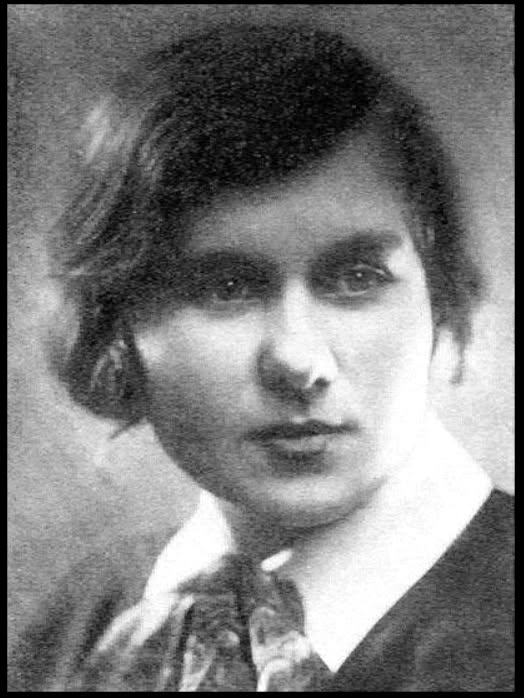
And yet, despite these extremely straitened circumstances, 1923-1925 would prove to be a uniquely fertile time for Shostakovich’s emergence as a true modernist composer. In later years he would come under the intense and unrelenting scrutiny of the censors, but at this early juncture, Shostakovich remained free to follow his artistic imperatives and heed others’ advice. In a letter to his girlfriend, Tatyana Glivenko, in the spring of 1925, Shostakovich wrote admiringly of musicologist Boleslav Yavorsky, who had pointed out that his early efforts were “infected with conservatism” that Shostakovich was “trying to get rid of.” Writing to Tanya about the String Octet, in July 1925, Shostakovich said, “I’m gradually becoming more of a modernist.”
“The very best thing I have written…”
The String Octet Op. 11 was originally planned as a five-movement work for which Shostakovich had sketched a Prelude and a Fugue in 1924. The Prelude was written as an elegy for Shostakovich’s close friend, poet Volodya Kurchavov (1900-1925), whose terminal diagnosis of typhus Shostakovich learned of in December 1924. Progress on the Octet was interrupted by work on the 1st Symphony, which was completed in the first half of 1925. Shostakovich returned to the Octet in July 1925, discarding the Fugue along with plans for the other movements, and adding instead a newly composed Scherzo, which he described as “the very best thing I have written.” In the scherzo, one can hear one of the earliest examples of the pungent energy, dubbed “grotesque” by contemporary music critics, that would become a hallmark of Shostakovich’s compositional style.
Volodya Kurchavov succumbed to his illness in the first half of 1925, and the Two Pieces for String Octet, Op. 11, completed shortly after, were dedicated to him. The public premiere of the String Octet, took place on January 9, 1927, in the Mozart Hall of the Stanislavsky Art Theatre in Moscow. The Performers were two established Soviet ensembles, the Stradivarius Quartet, Boris Simsky, Pyotr Bondarenko, violins, Grigory Gamburg, viola, and Viktor Kubatsky, cello, with the Glière Quartet, Vasily Kalinovsky, Mikhail Targonsky, violins, Dmitry Lutsky, Viola, and Svyatoslav Blok, Cello. The program included Shostakovich himself premiering his even more modernist Piano Sonata No. 1, composed in 1926.

Accessible Modernism
The consensus among critics that evening was that the Octet was a triumph of “accessible modernism.” While many critics found the Piano Sonata No. 1 too dense and harshly modernist, critics viewed the Octet as the superior, more mature masterpiece because it expressed original modernism well within the boundaries of chamber music. Critics admired the Prelude on technical grounds, citing Shostakovich’s success with formal counterpoint and casting the work as following the lineage of J.S. Bach and Romantic Russian composers Glazunov and Glière. The Scherzo was characterized as stylistically “grotesque”—a trait that would become a hallmark of Shostakovich’s output. Critics from Moscow’s progressive music journals were fascinated by the movement’s “piquant dissonance” and “forcefully driven” rhythms. While more traditionalist critics of the day might have regarded the glissandi, strident sounds, and aggressive textures as “noise,” the progressive critics embraced the new sounds as contemporary expressions of the modern, machine-driven world.
Encore, Encore!
The public reaction at the premiere was unambiguous: at the conclusion of the scherzo, the crowd spontaneously erupted, repeatedly demanding the musicians return to the stage, resulting in an immediate encore of the movement—something rare for any aggressively modern chamber piece. The Octet emerged as the crowd favorite of the evening. It was a watershed moment in the 20-year-old Shostakovich’s career. From this point forward, the Two Pieces for String Octet, Op. 11 became a fixture in the repertoire, and the name Shostakovich began to take center stage in Soviet musical life.
Come join us August 12-14 for a rare reading of Shostakovich’s Two Pieces for String Octet, Op. 11 in a full program of string octets, and be sure to stay for the reception to chat with the performers about their experience performing this piece.