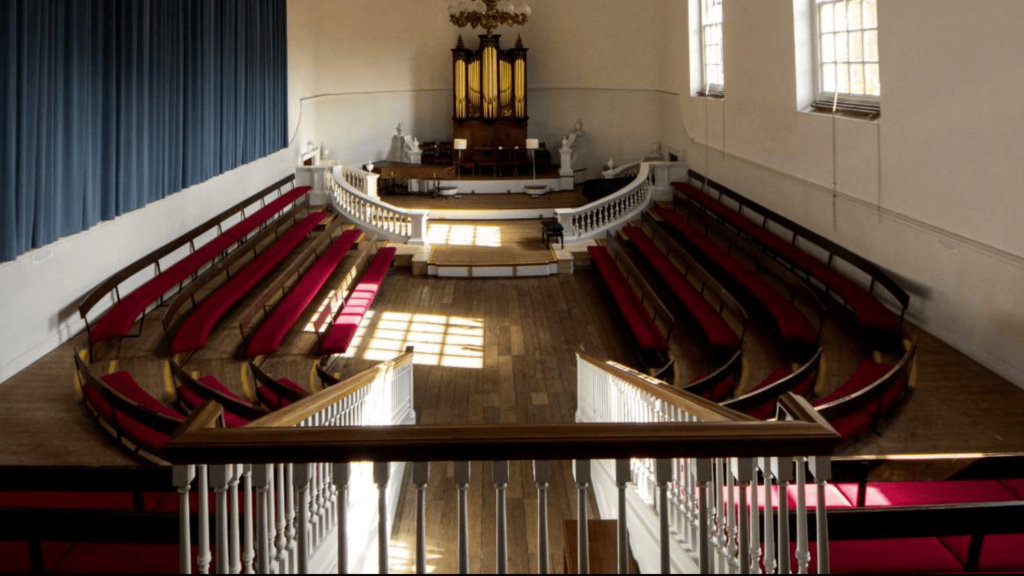

Chamber music made personal! What could be more fitting than opening Guarneri Hall’s 2024-25 season with the NEXUS Chamber Music Festival’s journey to the realm of dreams, where fantasy, memory, and song come together. Like musicking, dreaming is a universal human experience – yet the images of our dreams and our understanding of them, like our responses to and interpretations of the music we experience, are different and personal to each of us. They arise out of our own unique feelings, memories and imagination, and no one else’s.
A Universal Human Experience

Since ancient times, dreams have fascinated us. The vivid atmosphere of their disjointed, but somehow plausible, narratives promises to link us to a mysterious store of knowledge and power that lies beyond the everyday world we think of as reality. We have invested dreams with the ability to prophesy, to convey messages from a deity, and to provide clues to solving our own problems. Not surprisingly, dreaming has long been associated with artistic production as well; both processes are the expression of creative unconscious instincts. Indeed, stories of musical compositions inspired by dreams abound. Giuseppe Tartini claimed that after waking from a dream in which the devil played brilliantly on the composer’s own violin, he wrote down the piece now famous as his “Devil’s Trill” Sonata. According to Paul McCartney, “Let It Be” is based on a conversation with his long-dead mother who visited him in a dream.
Deeper Levels of Meaning in the Imagination
The unconscious had been observed as a cognitive phenomenon as long as two thousand years ago by the Greek physician-philosopher Galen. With the rise of Romanticism in the early 19th century, the unconscious achieved high status as an essential source of knowledge and understanding. Complete knowledge of the world for the Romantics was only possible by incorporating personal experience, intuition, communion with nature (no matter how frightening or malevolent), and exploration of the emotional and the irrational. As ethnomusicologist and philosopher Lewis Rowell put it, “The lens of philosophy became gradually trained inward, focusing on internal, not external, nature.” During this era, as lyric poetry came to be regarded as the primary representation of the human spirit and music the art most immediately expressive of innermost human emotion, the two united in the invention and flowering of the art song. With this new genre, word and tone would interact almost magically to inspire deeper levels of meaning in the imagination.
By the late 19th century, the unconscious had replaced the thinking self as the source of creativity. The dream continued to be viewed as a form of non-rational thinking and a font of insights. Significantly, music was placed at the highest rank of the creative arts, more “romantic” than poetry or painting, because of its power to stimulate a wide range of thoughts, associations, and emotions without directly referencing the external world.
However, not until Sigmund Freud’s groundbreaking work at the turn of the twentieth century would the unconscious be treated systematically. The defining project of Freud’s life was the acquisition of knowledge about the unconscious, leading him to create the theories and techniques of psychoanalysis and to write his revolutionary The Interpretation of Dreams (1900). Freud’s interest in dreams was not artistic, religious, or mystical, but rather clinical. If he could discover from where in the mind dreams originate and how they work, he would have the key to understanding the structures and processes of the unconscious.
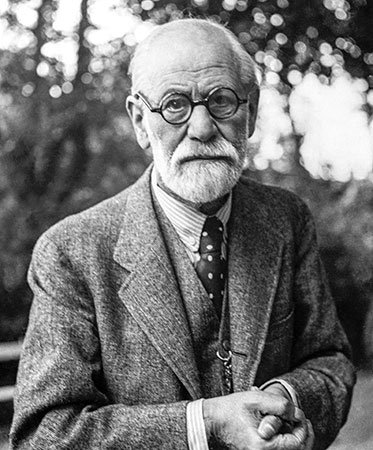
Elements of Freud’s dream theory have few adherents today, particularly the idea that dreams express long-suppressed wishes from the dreamer’s infancy, primitive drives and buried emotions that are transformed from memory into dream symbols during sleep. Nevertheless, he fundamentally changed the view of human behavior by explaining how mental processes we are unaware of affect the ways we act and think. As biologist E.O. Wilson states, “Freud’s conception of the unconscious, by focusing attention on hidden irrational processes of the brain, was a fundamental contribution to culture.”
Freudian concepts have been frequently applied to music criticism and analysis. To understand why this feels appropriate, it is helpful to consider two important factors that dreams and music share: both rely on the faculty of memory and manipulate the sense of time. People, places, and events from the past – maybe from yesterday, maybe from years ago – appear as the material of dreams while the brain organizes and interprets remembered experience. Music perception similarly relies on memory. Throughout the duration of a work, the listener evaluates what is heard in the moment against what has previously sounded, recognizing recurrences, transformations, and gradual or sudden changes. The listener may also be prompted to recall music they have heard in the past, creating a perceptual network of musical identities.
Shifting Time Frames
Time is complex and non-linear in both dreams and music. Past and present intermingle for the dreamer as the order of experiences is rearranged and time frames shift suddenly, both backwards and forwards. The continuity of waking life disintegrates. Music, as well, employs multiple strategies for shifting time frames within a single hearing. Tempo change is perhaps the most obvious one. Recurring motifs or themes bring past moments into the present, requiring that we reassess them in light of what has sounded since their last appearance. Quoting music from the past (like the hymn “Simple Gifts” in Copland’s Appalachian Spring) similarly collapses time distances, merging past and present. The pace of melodic or harmonic change may quicken or slow, affecting the sense of time’s passage; we feel acutely that we are hurtling toward a climax or stretching out a tender moment.
There Is No Limit
Freud’s account of the dream helps us to see the musical work not just as a reflection of its creator’s mind, but as a form of production. The dream-work consists of making symbolic images out of the dream thoughts. There are multiple representations of the dream thoughts by many elements throughout the dream. Associative paths lead from one element to several thoughts, and from one thought to several elements. Tracing these associations aids in interpreting the dream. In music, ideas are transformed by certain compositional techniques into a product; multiplicity is achieved through repetition and transformation. We hear ideas repeat and change, and we perceive relationships therein. But we also make connections between what we hear and things outside the music that might shed light on its meaning. The connections Freud claims we make in dreams are analogous to the ways we commonly speak of music: ascribing intentionality to musical events (as when we hearing them “in dialogue,” “driving,” “resolving,” or “interrupting”); applying descriptive onomatopoeia or emotional/psychological states (“screeching,” “crashing,” “triumphant” or “sorrowful”); or describing music as three-dimensional sound objects moving through space (“thick” chords, “soaring” melodies, “swirling” or “descending” passages). The more such associations we can make, the richer the music seems; there is no limit.
The Dream of Peace
Night, the typical setting of dreams, and memory, the source of dream thoughts, figure prominently in the program of Dreamscapes: A Liederabend. Each work on the program seems focused on the attempt to return to a place of peace, comfort, or happiness. Brahms’s Zwei Gesänge, Op. 91, are lullabies; their texts speak of the longing for restorative sleep. The texts of Wie Melodien zieht es mir, Lerchengesang, and Sapphische Ode recall a sensory memory that transports the speaker. In Chausson’s Chanson perpetuelle, a desolate woman, abandoned by her lover, visits on a starry night the place they used to meet and contemplates her suicide. Augusta Read Thomas’s Plea for Peace is a dream in the sense of an aspiration, while night might be applied as a symbol of the darkness of war and destruction. If, as Freud supposed, a dream is the fulfillment of a deep-seated wish, then it must be the one expressed by Virginia Woolf, the chronicler par excellence of interior life: “Dream the recurring dream that has haunted the human mind since the beginning of time: the dream of peace…”
Seven Early Songs
The most elaborate dream construction seems to be the program’s centerpiece, Berg’s Seven Early Songs from 1928. These are some of the dozens of songs he had originally composed while studying with Schoenberg twenty years earlier. No one knows why, late in life, he chose these seven and carefully arranged them into a cycle, long after he had abandoned the medium of solo song. Traumgekrönt (Crowned with Dreams) appears in the central (“crowning”) position.
As the opening song, Berg chose Nacht (Night), and the third song is Die Nachtigall (The Nightingale). The titles of the other four songs do not continue the nocturnal theme, but their texts do; all contain references to night, stars, and dreams. By establishing the idea of night at the outset, placing the overt dream poem exactly in the center, and surrounding it with night imagery, Berg creates a realistic dream scenario.
Dreams and music both deal in connotation, ambiguities, and evocations, bringing us into a world where almost anything is possible! When we let them speak to us, we can re-imagine the ordinary. We hope to revel with you in the mysteries, surprises, and wonders of the Nexus Chamber Music Festival’s Dreamscapes: A Liederabend on August 20.