
In 2003, Decca Records issued a two-CD compilation of the music of Sergei Prokofiev (1891-1953) to commemorate the 50th anniversary of the composer’s death. The selections spanned Prokofiev’s creative output from his student days at the St. Petersburg Conservatory in the early 1900s up to the year before his death, and encompassed the genres for which he is best known – opera, ballet, symphony, concerto, and piano solo. Decca’s title for the collection was perfect: Enfant terrible. This epithet was regularly hurled at Prokofiev, who began his career as a brilliant young rebel whose explosive virtuosity at the piano and tradition-shattering compositions shocked many a bourgeois listener in pre-revolutionary Russia and established his reputation as an avant-garde artist.
The Rise of the Avant-Garde
Prokofiev’s entry into the Conservatory in 1904 coincided with the onset of modernism, a global wave of philosophical, artistic, and cultural responses to the drastic social and psychological shifts caused by the rapid rise of industrialization, urbanization, and technological advancement during the Victorian era. According to the modernists, the human condition itself seemed so profoundly changed in the new century that it had to be reconceived. Originality and individuality now held the highest value, rather than building on established tradition. New ways of conceiving, processing, and expressing modern experience developed in the realms of art, literature, and music; among them were Cubism, Futurism, and Constructivism – all avant-garde movements that flourished as Prokofiev came of age.
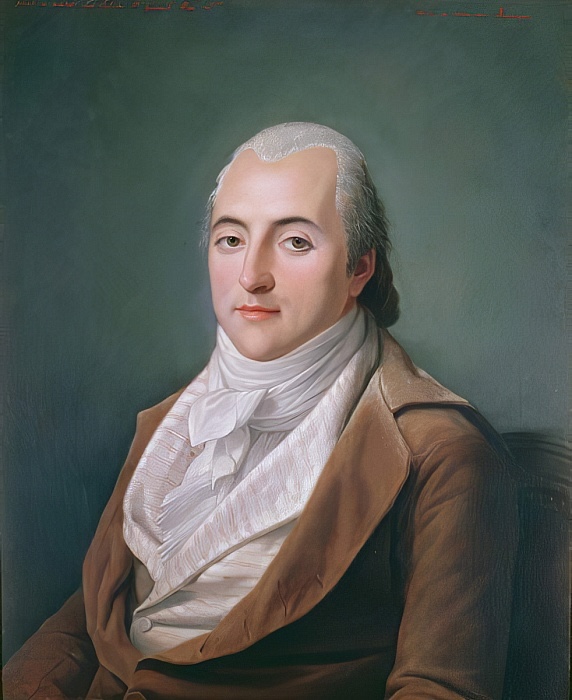
Since its first application to artists by the French socialist and theorizer Henri de Saint Simon in 1825, the term “avant-garde” has meant more than an innovative aesthetic approach. Saint Simon viewed artists, scientists, and industrialists as a coalition of leaders with the capacity to guide a society forward. The avant-garde artist in this configuration engages in cultural discourse through critique and commentary on society.
In Russia, particularly, the concept of art as a vehicle for social change possessed great significance. From the turn of the century through the early 1920s, the nation had been ravaged by internal strife and widespread unrest and besieged by foreign armies; all facets of the old order were utterly destroyed by revolution and civil war. In 1908, the Russian Symbolist poet Alexander Blok had foretold the rupture that would take place as the modern world encroached: “The distant thunder of approaching storm is heard. We are living through a terrible crisis. We do not know exactly what awaits us, but the needle of the seismograph is already deflected.” Thus, after the revolution of 1917, Russian artists and composers of the avant-garde pursued new techniques and styles that would resonate with the progressive new social order being constructed by the Soviets.
Shared Principles
As early as 1908, while still enrolled in the Conservatory, Prokofiev began cultivating his image as an iconoclast and innovator through regular performances of his own works on concerts of the Evenings of Contemporary Music in St. Petersburg and Moscow. His audacious musical creations and powerful, aggressive pianism earned the support of the most forward-thinking musicians and critics, laying the foundations of his career. At the same time, he held himself aloof from movements and systems, relied on his own musical judgment over anyone else’s, and evinced little awareness of politics. He wrote no artistic manifesto nor formulated a pedagogical philosophy.
To further complicate matters, Prokofiev left Russia in 1918 and did not return until 1936, so for many years he was cut off from developments in Soviet musical life. Thus, it is no straightforward task to situate Prokofiev’s artistic agenda within the currents of Russian musical modernism. What emerges upon examination of Prokofiev’s music and activities, however, is an interesting constellation of shared principles, common features, and professional collaborations that resonate with ideals and aims of avant-garde art.
In true modernist style, Prokofiev’s first and highest compositional principle was originality: the development and cultivation of a unique compositional voice. He lived by modernism’s imperatives to constantly invent and reject history. He called himself “a student of my own ideas,” striving always to make his music different by creating new sound combinations and formal schemes. For example, his treatment of the piano as a percussion instrument was new and broke with tradition. Prokofiev eschewed the lyricism of Chopin and Rachmaninov as sentimental and old-fashioned. Instead, he infused his piano works with massive thundering chords, rapid, hammered, repeated notes, and pulsating motoric rhythmic figuration, brought vividly to life in performance by his tremendous virtuosity.
Form and Function
Jessica Stewart and Margherita Cole, curators at the Metropolitan Museum of Art in New York, have identified Cubism as one of the most well-known, innovative, and influential avant-garde movements of the 20th century. Founded in Paris by painters Pablo Picasso and Georges Braque around 1907-08, its adherents abandoned the traditional conventions of representation, proportion, and form. Objects and people in their paintings were fractured, re-sized, and reassembled as collages of geometric shapes to encourage the perception of multiple angles and views simultaneously, and to enable a new mode of spatial perception unrelated to realism. Russian painters like Natalia Goncharova and Vasily Kandinsky embraced the possibilities of Cubism to re-imagine reality, and as an analog to the social reconstruction undertaken by the Soviets, they moved the style further toward abstraction.
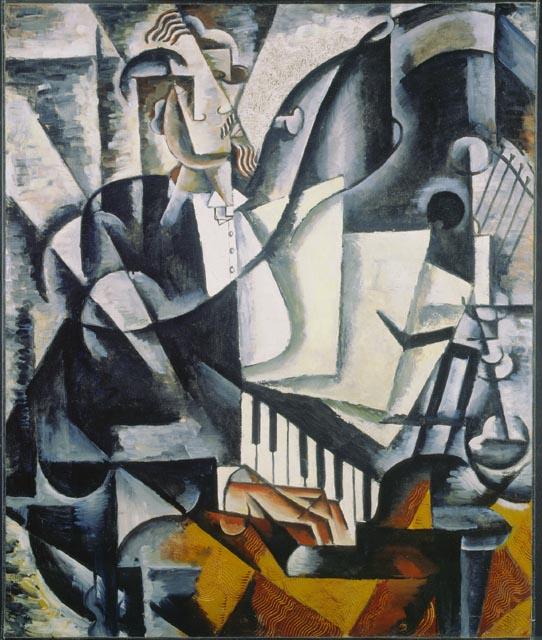
Prokofiev’s manipulation of form and function in his works readily aligns with the goals of Cubism. Prokofiev explained his approach thusly: “New life, new subject matter demand new forms of expression, and the listener must not complain if he has to exert a little effort to grasp these forms.” His Piano Concerto No. 2 was actually scorned by critics at its 1913 premiere as “cubist.” Instead of linear melodies, we hear jagged and angular ones whose progress is somewhat difficult to track. Sections are distorted in size: the first movement’s central development section dwarfs the other sections and incorporates a massive cadenza, which Prokofiev marks colossale, while the recapitulation that ensues compresses the return of the opening themes. A brief, quiet coda then replaces the entire slow movement that would conventionally follow in a “normal” concerto.
His third Piano Concerto (1917-21) displays a different configuration of cubist elements. Prokofiev avoids any straightforward repetition or recapitulation of themes, jumbling their order and skewing their character each time. Transitions and smooth connections are absent; instead, Prokofiev juxtaposes sections of contrasting characters and jumps directly from one key to another. The same distorted repetitions, changes of direction, and disruptions reappear in his Scythian Suite (1915) for orchestra and the cantata Seven, They Are Seven (1917).
Futurism and Friends
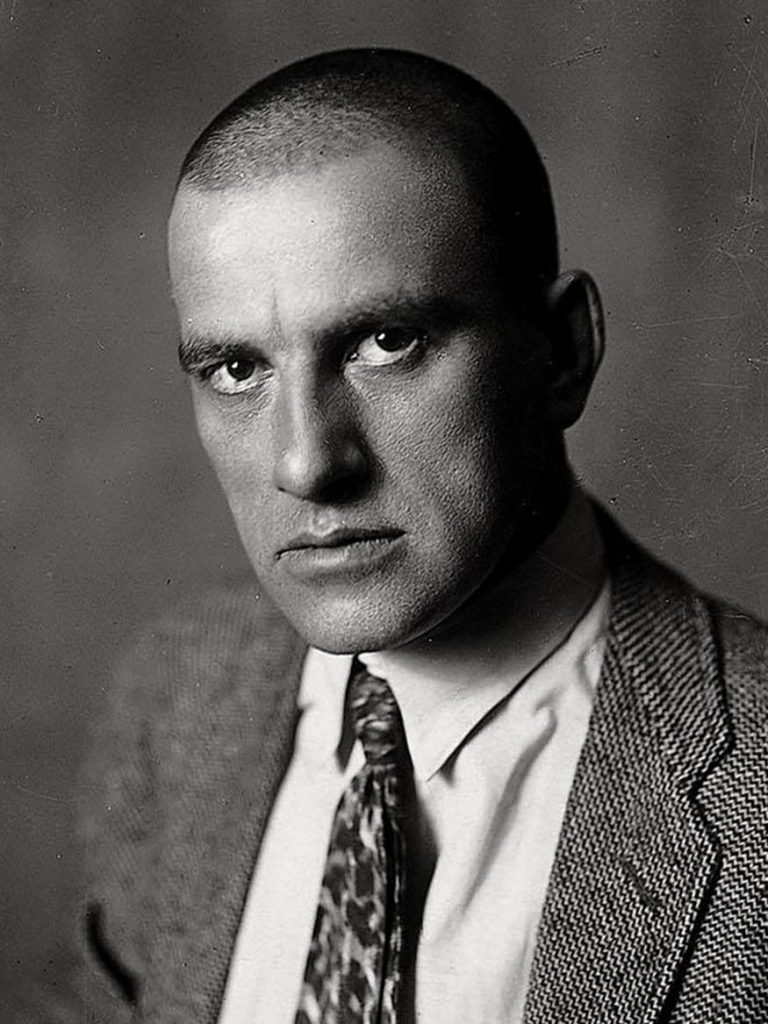
Futurism was formally launched in Russia with the 1912 publication A Slap in the Face of Public Taste, a collection of essays and poems by Russian poets and artists who espoused the principles of Italian Futurism, which originated in Milan in 1909 and primarily involved painters and sculptors such as Filippo Marinetti. The Futurists completely rejected the past and directed their sights toward modernization and a rejuvenated future culture that prized urbanization, machinery, industry, and technology. Speed was celebrated and idealized. The futurist art theorist Kasimir Maslevich wrote in 1915 that the ability to construct art was based not on interrelation of form and color or on an aesthetic concept of beauty but “on the basis of weight, speed and the direction of movement.”
The leading futurist poet Vladimir Myakovsky, who founded the journal The Left Front of Art, praised the Russian Revolution for ending the old way of life which he and other futurists despised; he wrote in 1923, “Futurists! Don’t dream of living on the dividend of yesterday’s revolutionary spirit. Show by your work today that you are laboring shoulder to shoulder with all those who are straining towards the victory of the commune.” Myakovsky’s poetry emphasized social and political themes and drew energy from its declamatory tone, unconventional syntax and layout, and rhythmic force.
Prokofiev never collaborated with Myakovsky directly, though his diaries attest to a friendship between them lasting some ten years. They were brought together by their mutual acquaintance, Sergei Diaghilev, who suggested that the three might collaborate on a project. While the project never materialized, Prokofiev and Myakovsky spoke admiringly of each other’s work. In 1925, however, Prokofiev (who had always been attracted to speed and rhythmic propulsion) composed a futurist “Bolshevik” ballet for Diaghilev titled Stal’noy skok (The Steel Step), whose scenario glorified machines and their workings. The ballet was a series of scenes without a plot; Prokofiev described how “hammers large and small, transmission shafts turning and flywheels as well as flashing colored lights” appeared on stage as the dancers “had to work at the machines and at the same time illustrate the working of the machines in dance.” Accordingly, Prokofiev minimized his use of melody to highlight the rhythmic power of the machines, gradually increasing the rhythmic intensity until the machines and dancers reached a frenzied climax.
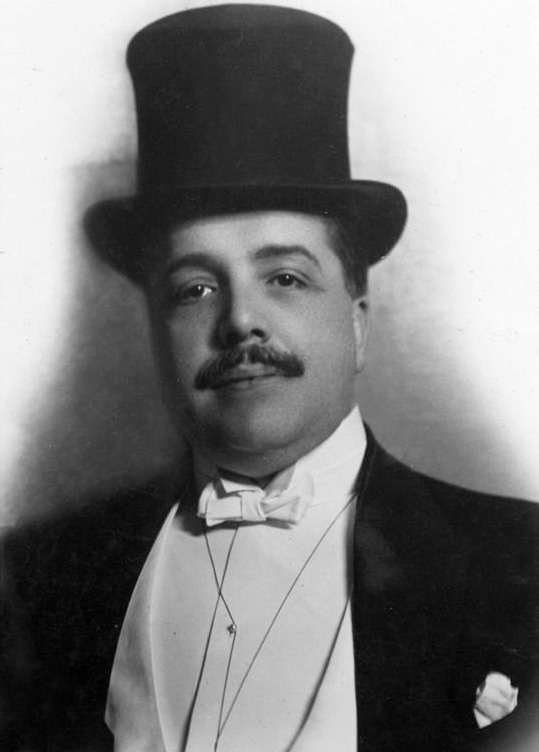
Russian Constructivism developed from Futurism during World War I, spearheaded by Vladimir Tatlin and Alexander Rodchenko, whose work encompassed painting, architecture, graphic and stage design, and photography. Their influence extended over these fields as well as sculpture, industrial design, and cinema. Constructivists rejected ornament and stylized design, emphasizing the materials of structure and assembly. One method of doing so was to “defamiliarize” them, calling attention to space, volume, plane, color, and line and their functions, which the observer might not otherwise notice. In the words of constructivist artist Wladyslaw Strzeminski, “The perfection of a work of art must be its content.” The use of “worked material” which can be transformed into one thing or another reminds the observer of the possibilities of existence, particularly within a Marxist-utopian world view.
Prokofiev had applied similar thoughts to the construction of unique sound combinations in his music. In 1918 he described dissonance as a kind of defamiliarization: “The combination of movements of sound in quantity which are more complex than consonant combinations. As a result, it is more difficult for the ear to seize and follow them; yet, once grasped, they afford a richer appreciation than simpler harmonies can give.” He used complex sounds to engage listeners and radically recast the process of reception. But Prokofiev’s most prominent connection to Constructivism came through his collaborations with the constructivist filmmaker Sergei Eisenstein on the films Alexander Nevsky (1938) and Ivan the Terrible (1945-46). Eisenstein considered Prokofiev “one of the greatest and also the most wonderful film composer” because of Prokofiev’s talent for translating visual images into musical images, which was ideally suited to Eisenstein’s montage style of filmmaking. After viewing a film’s rushes, reports musicologist Katya Ermolaeva, Prokofiev could produce music within 24 hours, which Eisenstein declared “unerringly captured the emotional effect, rhythm and structure of the scene.” The synthesis of the two modes of perception achieved by Eisenstein and Prokofiev stands as a rich and sophisticated methodology that lent depth and narrative strength to the artistic product.
Experimentation Suppressed
Following his return to the Soviet Union in 1936, lured in all likelihood by implications that he would possess artistic stature and creative freedom there, Prokofiev enjoyed neither. Under Stalin, the Soviet government waged a campaign of artistic terrorism and censorship: any progressive voices were so brutally silenced that it was nearly impossible to conceive of the survival of the avant-garde movement. Prokofiev suffered public humiliation when he was forbidden to leave the USSR or perform. His new projects were frequently suppressed, delayed, or forced into revisions, while his previous works were censored and banned because they were deemed to fail to meet the regime’s vague and arbitrary ideological requirements for “socialist realism” (simplicity and ease of comprehension; tunefulness; stylistic traditionalism; clear folk influences). Yet Prokofiev, ever fearful of becoming provincial and old-fashioned, continued to compose new works to the end of his life, despite persecution and oppression. The enfant terrible remained true to his modernist commitment to constant innovation.
This article was written in conjunction with the September 2026 Guarneri Hall three-concert series, Prokofiev and the Russian Avant-Gard.