
The nine piano sonatas of Sergei Prokofiev (1891-1953), which span the entire course of his creative activity from his youth up to his final year, are widely considered one of the most significant bodies of piano music composed in the twentieth century. They are monumental in their physical demands upon the pianist, dazzling in the brilliance and variety of their sound worlds, and deeply expressive of human struggle, resilience, and passion. These sonatas speak in Prokofiev’s unmistakable musical voice; they embody his evolving artistic goals but also bear the imprint of his tumultuous life and times. Thus, each sonata will be contextualized in the program notes by the personal and historical circumstances that nurtured and colored it.
September 29, 2026: Echo and Image
Sonata No. 5 in C Major, Op. 38 (1923) (Revised as Op. 135, 1952-53)
The Fifth Sonata is among the most chromatic of all my compositions. This was the effect of the Parisian atmosphere where complex patterns and dissonances were the accepted thing, and which fostered my predilection for complex thinking.
By 1918 Sergei Prokofiev was well known as a brilliant virtuoso whose bold compositions shattered Romantic traditions and earned him prominence among the artistic avant-garde of St. Petersburg and Moscow. But with Russia torn apart by revolution and war, he feared the demise of all musical activity and along with it, his burgeoning career. In America, concert life was thriving, so he moved that year to New York to try for artistic success there. However, after nearly four years of hard work in the U.S., he had not achieved the critical acclaim, performances, or profits he hoped for. Disappointments piled up; the last straw was the two-year delay and loss of commission for his opera The Love for Three Oranges. “I was left with $1000 in my pocket and an aching head, to say nothing of a fervent desire to get away to some quiet place where I could work in peace.”
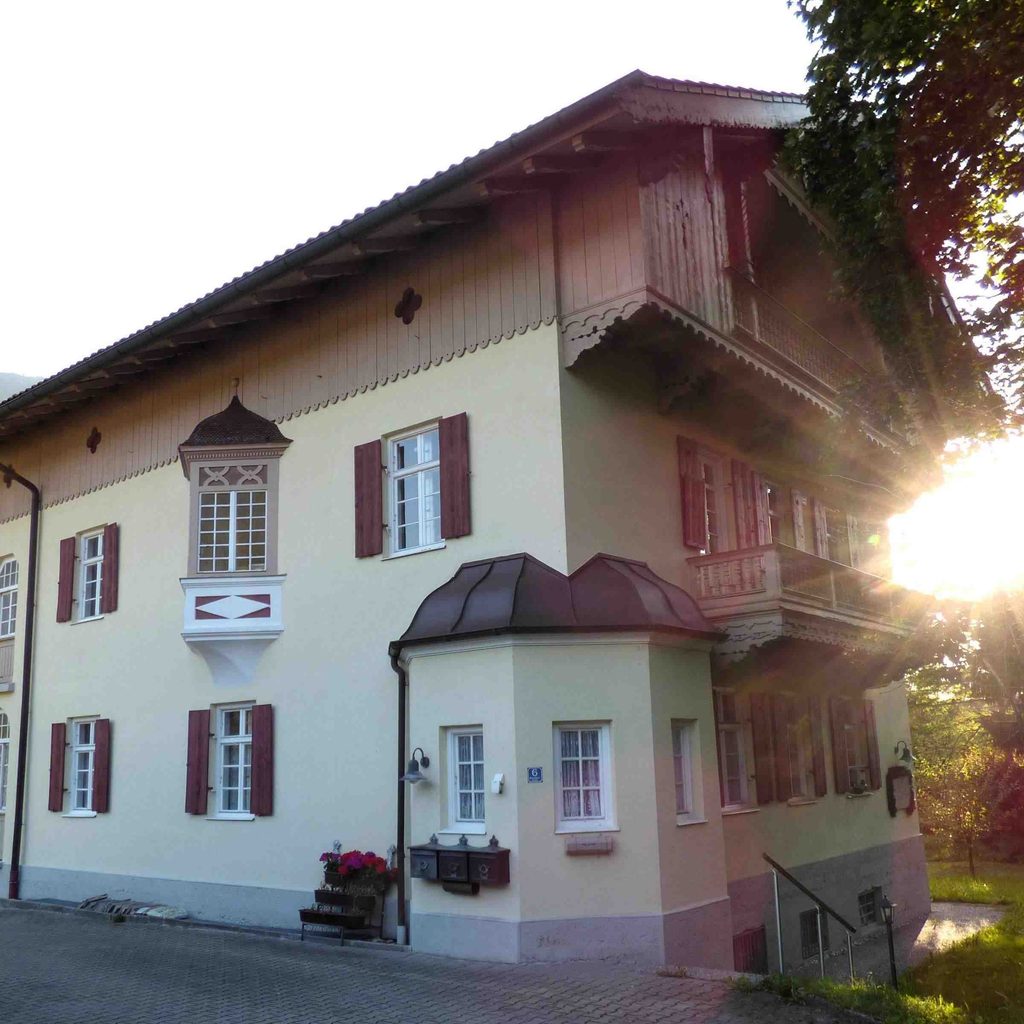
Prokofiev sailed from New York to Boulogne in early 1922. He could not afford to live in France, where he had spent considerable time since emigrating in 1918. But he found a congenial spot in Ettal, a peaceful town in the Bavarian Alps, and settled there in March 1922. Concert appearances across Europe – regularly in Paris – were his only source of income while in Ettal, and they took him away from his refuge, interrupting both work on his current major project, the opera The Fiery Angel, and his own convalescence. In 1919 while in New York, Prokofiev had contracted scarlet fever and diphtheria; the effects lingered for years, plaguing him with chronic bronchitis and heart problems. By summer 1923 he felt recovered, and he was joined in Ettal by his fiancée Lina Llubera Codina; the two married in October of that year. But as productive as his time in Ettal had been, Paris beckoned. It offered significant audiences for modern music, a network of important institutions, publishers, and conductors, and proximity to major supporters of Prokofiev’s music like Diaghilev and Koussevitsky. So, at the end of October 1923, the Prokofievs moved to Paris.
A familiar mix of success and frustration awaited Prokofiev in Paris. Hostility greeted the premiere of his First Violin Concerto in October 1923, but positive responses to his Second Piano Concerto, the Scythian Suite, and the cantata Seven, They Are Seven in May 1924 inspired him to write his Symphony No. 2. The symphony’s premiere under Koussevitsky’s baton in June 1925 was a critical failure, which shook Prokofiev’s confidence. Seeking to right the course of his career, he accepted a project from Diaghilev for a new ballet, The Steel Step, whose 1927 premiere was a popular and critical success. However, his Piano Sonata No. 5, which he played regularly in recital during the 1920s, received only a “cool” reception, despite his belief that the piece, especially its finale, was a success.
Prokofiev’s Piano Sonata No. 5 is unique in his output: a product of his European sojourn, it is the only one written outside of Russia. He began it in Ettal in 1923, finding himself in need of more solo repertory for his many concert engagements. He completed the Finale shortly after moving to Paris and premiered the work there on March 9, 1924. It was dedicated to Pyotr Suvchinsky, a fellow émigré and influential critic who had championed Prokofiev’s music in St. Petersburg and continued to support him in Paris. He later told his close friend Nikolai Myakovsky that he attributed its calmness to his recuperation from illness in Ettal. Yet in it we can hear Prokofiev heading in new directions, leaving behind the futility of his American experiment in search of a modern cosmopolitanism.
In 1952, while preparing a new edition of his sonatas, Prokofiev decided to revise the Fifth Sonata. This new version, which he published with a different opus number, is the one we will hear tonight. It was among the last works he completed before his death. Aleksander Vedernikov premiered the Op. 135 version posthumously in Almaty, Kazakhstan on February 2,1954.
The first movement unfolds in three sections. Texture and scoring are important; they differentiate the three principal ideas from one another and enable the listener to hear how each idea evolves as the movement progresses. The opening theme is a serene melody supported by an oscillating accompaniment and steady chords. A rapid scale introduces the second, transitional idea, a circular melody that winds around under questioning interjections. The third, contrasting theme has two parts: a sharp announcement, and a drooping melodic gesture. The middle section develops the ideas in their original order. Their distinct melodic identities remain intact while texture, dynamic, and register changes transform their characters. In the final section, the opening theme sounds almost exactly as it did at first, while the second and third are much more elaborate and dramatic. The surprise comes with the coda: it is a rapid, brilliant version of the opening theme.
The second movement displays the “Russian Fairy Tale” features: it is a bizarre waltz which has no momentum, somewhat grotesque and spooky in character. Its soft and mysterious melodies don’t seem to have a destination, and are peppered with quirky, unusual sonorities. Here too there are three sections, the middle one with an odd meandering theme that sneaks up out of the murky low register. When the opening waltz returns it is decorated with abrupt and unsettling slides which derive from the first notes of the middle section’s theme. In ghostly fashion, the movement simply dissipates rather than ends.
The finale breaks the fairy tale spell with a veritable circus parade of energetic and vivacious little melodies and motifs. A motoric bridge section chugs sequentially up the keyboard and opens to a wide-ranging expressive melody. Delicate snippets of the opening circus parade melodies return and wind down to a full stop. The movement then takes an interesting turn, jumbling and distorting the opening’s melodies. The nervous return of melodies from the first section begins softly but builds to a loud, emphatic restatement of the opening measures, and a brilliant coda brings the movement to a triumphant close.
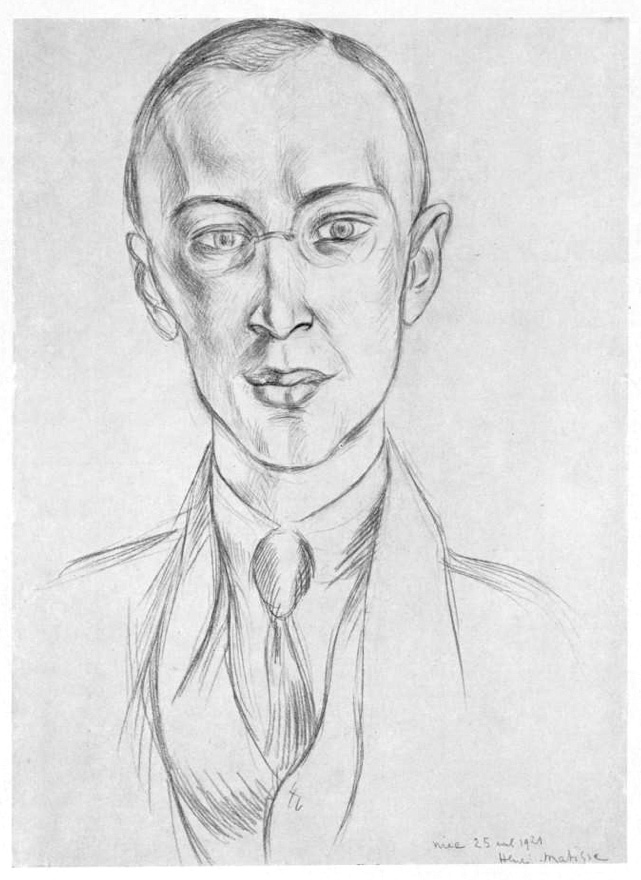
Sonata No. 8 in B-flat Major, Op. 84 (1939-44)
I love melody, and I regard it as the most important element in music. I have labored many years on the improvement of its quality in my compositions. To find a melody instantly understandable even to the uninitiated listener, and at the same time an original one, is the most difficult task for a composer.
Prokofiev did not allow the fickleness of Paris life to distract him from refining and developing his musical style. His notebooks from the period he worked on his last ballet for Diaghilev, The Prodigal Son, demonstrate that he had come to prioritize lyricism and the melodic essence, a concept he called new simplicity. “Modern music used to mean the search for new harmonies, then moved to the search for beauty in all kinds of insincere contrivances and complexities. More perceptive composers soon tired of this and went back to seeking simplicity — not, however, the old simplicity, but a new one.” His solutions were constantly evolving; new simplicity became an obsession that influenced him for the next two decades. “I was hampered by the fear of reverting to the ‘old simplicity.’ I did not give up hoping that these new melodies would become the accepted idiom.”
But by the late 1920s, Prokofiev saw that Paris was not the answer. The demand for his music and the loyal audience he sought had not materialized. Stravinsky, the most prominent musician living in Paris, dominated the scene and was favored by presenters; the popularity of Poulenc, Auric, and Milhaud, whose music he called “vulgar doodles,” enraged him. The sudden death in 1929 of Diaghilev, his most important artistic partner, was a huge blow, and after Diaghilev was gone, Paris’s interest in Russian music dwindled.
By contrast, Prokofiev’s popularity in the Soviet Union was growing. He had kept in contact with old friends from the Conservatory, and they now occupied positions of influence in the new regime and promoted his music. They reported that his works were played regularly in the U.S.S.R.; many were published by the state publishing house. Thus, when the Soviet government implemented a plan to repatriate émigré artists and contrived to meet Prokofiev in Paris, inviting him to give a concert tour in the U.S.S.R., his interest was piqued. In 1927 he accepted the offer and would make two additional tours in 1929 and 1932. Prokofiev finally felt welcomed and appreciated. After receiving additional inducements like commissions and promises of privileged status, in May 1936 he relocated to Moscow.
Prokofiev’s misfortune was to return just as Stalin began his campaign of terror against artists by viciously attacking Shostakovich. It would be only a matter of time before Prokofiev received the same treatment. By 1938 he was forbidden to leave the U.S.S.R., and his works were censored and condemned. Simultaneously his marriage fell apart; Lina had resisted moving to Moscow and suffered under the privations and arcane bureaucracy of Soviet life, neglected and isolated while Prokofiev devoted all his time to composing. Prokofiev eventually left Lina for Mira Abramovna Mendelson, a young poet who became his second wife and would dedicate her life to supporting him artistically and personally.
Paradoxically, World War II brought temporary respite from artistic persecution. Stalin’s government was more concerned with defeating Nazi Germany and took steps to protect its cultural figures so they could produce works that would inspire patriotism and resistance to fascism. Prokofiev, like many important artists, was shuttled to various places of safety during the war; at one such haven, Ivanovo, he completed his Eighth Piano Sonata.

Prokofiev had begun sketching out No. 8 in 1939, the year he fell in love with Mira Mendelson. At that time he planned it to be the “tender and dreamy” conclusion to the group of three works we know as his “War Sonatas.” It was completed in October 1944 and premiered by Emil Gilels in the Grand Hall of the Moscow Conservatory on December 30 of that year. Dedicated to Mira Mendelson Prokofieva, the sonata was warmly received and honored with the Stalin Prize in 1945.
This is the only one of Prokofiev’s sonatas to open in a slow tempo, and it is to be played “sweetly.” Its first episode is tender and poetic, then fervently passionate. It gives way to a sudden cascade of arpeggios that relaxes into a new, more pensive melody which softly fades away. The middle section begins uneasily; its agitation grows and cannot be soothed. It presses forward in a torrent of emotion and explodes in a climax of thundering bells. Traumatized by the previous violence, the opening sweet song and pensive second melody return as if in a trance. The coda, like a recurring nightmare, brings back the massive bells and the terrifying flood of arpeggios.
Based on a theme from incidental music Prokofiev composed for an unrealized stage production of Pushkin’s Eugene Onegin, the brief second movement is a lilting minuet. It is almost cinematic in structure; its coquettish melodies whirl by in a series of scenes, like the various dancers in a ballroom. No unrest disturbs the charm and grace of these few pleasant moments.
The thunderous finale is a pianistic tour-de-force, a driving tarantella whose single-minded forward motion is mechanical, if not militaristic. The expansive opening section exploits a triplet arpeggio figure that surges up and down the keyboard. It is followed by a vigorous and assertive waltz for heavy-footed dancers that grows to an exuberant climax. The atmosphere turns sinister with heavy octaves in the bass. Again, like the first movement’s recurring nightmare, we hear a shrill reminiscence of a theme from the first movement, which turns ghostly and faltering. But the music gradually regains strength, and the opening tarantella returns in full force, bursting into a triumphant and brilliant coda.
Sonata No. 9 in C Major, Op. 103 (1947)
This sonata is very different from the three preceding ones. It is calm and deep. When I told Sergei that my first impression was of it being both Russian and Beethoven-like, he answered that he himself found both of these qualities present in it.

Painful, tortured, catastrophic: these are the terms in which the last years of Prokofiev’s life have been cast. His is the profoundly tragic account of a once vital and self-assured artist who suffered a drastic decline in health as he was persecuted, humiliated, and forced into penury by the Soviet regime.
Prokofiev’s health was never robust. In 1941 he had a heart attack, and from 1943 regularly experienced migraines and blackouts. Then a life-threatening crisis in January 1945 caused a significant downturn. Shortly after conducting the triumphant premiere of his Fifth Symphony, he fell and sustained a severe concussion. He remained hospitalized for several months, drifting in and out of consciousness. Even after recovering he was frail; for the remainder of his life, recurrent headaches and critically high blood pressure kept him under the supervision of doctors who forbade him to work more than an hour a day.
Prokofiev’s first major run-in with Soviet censors had come in 1937 with the suppression of his Cantata for the 20th Anniversary of the October Revolution because of “a lack of Soviet principles” and “incomprehensible music.” The stress and aggravation it caused him would pale against what was to come. In the years 1946-48 Stalin’s campaign of artistic oppression roared back to life. Four major resolutions dictating party control of the arts were issued by Andrey Zhdanov, Stalin’s cultural henchman; they would remain in place until 1953, enforcing total ideological conformity and obliterating artistic freedom. The resolution on music was passed in 1948 at a conference in which charges were brought against Prokofiev, Shostakovich, Myaskovsky, and Khachaturian. Prokofiev was publicly denounced for “formalistic distortions, anti-democratic tendencies, rejection of the principles of classical music, spurning folklore, and dissemination of atonality.” He was forced to publish a letter admitting and recanting his artistic errors, thanking the Central Committee of the Communist Party for its directives, and vowing to find an accessible musical language. Days later, eight of his works were officially banned from performance, including orchestral and stage works and his Sixth and Eighth Piano Sonatas. The message to producers and presenters was clear: Prokofiev’s music was not to be heard at all. His income disappeared, his pension was revoked, and works in progress were rejected.

The physical and emotional toll inflicted on Prokofiev by illness and abuse cannot be understated. He was blindsided and crushed by the arbitrary, insulting objections to his work, which had won him two Stalin prizes during the war and in 1947 the title of The People’s Artist. All his life he strove to write music that people would respond to, and he encouraged young Soviet composers to do the same. He could see no solution except to find a way to keep working. In the years he had left he would compose an opera; a four-act ballet; a symphony; a symphony-concerto; two suites, a fantasy, a rhapsody, and a festive poem for orchestra; an oratorio and a cantata; and a cello sonata. He would also begin another opera and a 10th Piano Sonata, and revise several earlier works including the 5th Piano Sonata. The creation of art remained his catalyst and his solace.
Prokofiev died on March 5, 1953, from an intracerebral brain hemorrhage, about an hour before the death of Josef Stalin. Few outside his intimate circle knew it; Stalin’s elaborate funeral rites and official mourning period eclipsed all else for weeks. But those who loved and respected him, like Dmitri Shostakovich, did not let his passing go unnoticed: “It has been the good fortune of my generation to have witnessed the rich flowering of the genius of Sergei Prokofiev. He was a bitter enemy of all that was dull, insipid, sentimental, and pretty in art, and one of the greatest masters of melody. His work will always be the pride of Russian socialist culture, and his memory will endure through the centuries.”
Sonata No. 9 was written in 1947, during the period when Stalin’s artistic persecution was intensifying and Prokofiev’s health was faltering. It is remarkable for its restrained and meditative tone which faces and quells each moment of crisis. Prokofiev also employs a unique structural device, introducing at the end of each movement the material which will open the next one. The work was first performed by Sviatoslav Richter on April 21, 1951, in Moscow, and was dedicated to Richter.
The first movement opens with a calm, straightforward song-like theme that repeats an octave higher as if reconsidering itself. Unison scales, somewhat impatient, transition to the gentle rocking of the mournful second theme. A new melody, widely spaced, eerie and ancient-sounding, closes the first section. Turbulence in the middle section is created by distorting and jumbling the previous themes; what had been tranquil becomes threatening. Slowly the music works its way back to the sweetly expressive opening material and regains its composure before previewing the quick scale passages of the next movement.
The second movement is a short, jumpy scherzo that lives up to Prokofiev’s expressive direction, “boisterous,” with its brash scales, sharp accents, clanging grace notes, and thumping bass chords. It unexpectedly runs out of energy and settles into a dialogue between the right and left hands. The opening’s scales reappear and launch us into a peculiar march, which is abandoned in order to introduce the third movement’s theme. Finally the scales, exhausted by their efforts, bring the movement to a close.
The third movement begins by juxtaposing sections of two different characters: a stately and noble song alternates with a fast and exuberant fanfare-like section. Each section is treated to multiple variations in texture and register. Interestingly, the differences between the two sections diminish as the movement progresses, as the fanfare is gradually absorbed and altered by the nobility and austerity of the opening song. Again, Prokofiev foreshadows the upcoming finale in the final measures.
The finale is all cheerfulness, with an atmosphere that reminds us of the playful and comical flourishes and marches in Prokofiev’s youthful works. Mid-movement, a slow, slightly sentimental passage arises from the low register, reaching upwards with uncertainty and repeating itself as if searching for the right way to continue. Good humor is restored with the recapitulation of the jaunty opening material, and the music’s march passage is expanded significantly. Then, Prokofiev casts a magic spell: the left hand plays suspenseful trills under the right hand’s mysterious incantation, and the opening theme of the first movement appears, followed by the tolling of bells and a final, gentle reminiscence of the opening of the piece.