The year 1918 witnessed the end to the slaughter on the battlefields of World War I, the collapse of global dynasties, and the destruction of centuries of Russian imperial rule through violent revolution. But it would not see peace. Traumatized by unimaginable carnage, devastation, and chaos, the world was changed forever after 1918 – the traditions, orders, and ideals of the past in tatters. The ruptures, despair, and skepticism of post-war existence are expressed in the compositions of Ravel, Stravinsky, and Janáček presented in Revolutions 2: 1918. They abandoned the lush sounds, harmonic beauty, sweeping melodies, and grand passions of late Romanticism in favor of terseness, spare dry textures, sudden outbursts, abrupt mood shifts, irregular and asymmetrical rhythm and meter, unusual and harsh sounds, and obsessive repetition. Each one reflects in a unique way the new artistic landscape.
Maurice Ravel (1875-1937): Sonata (Duo) for Violin and Cello, M. 73 (1920-22)
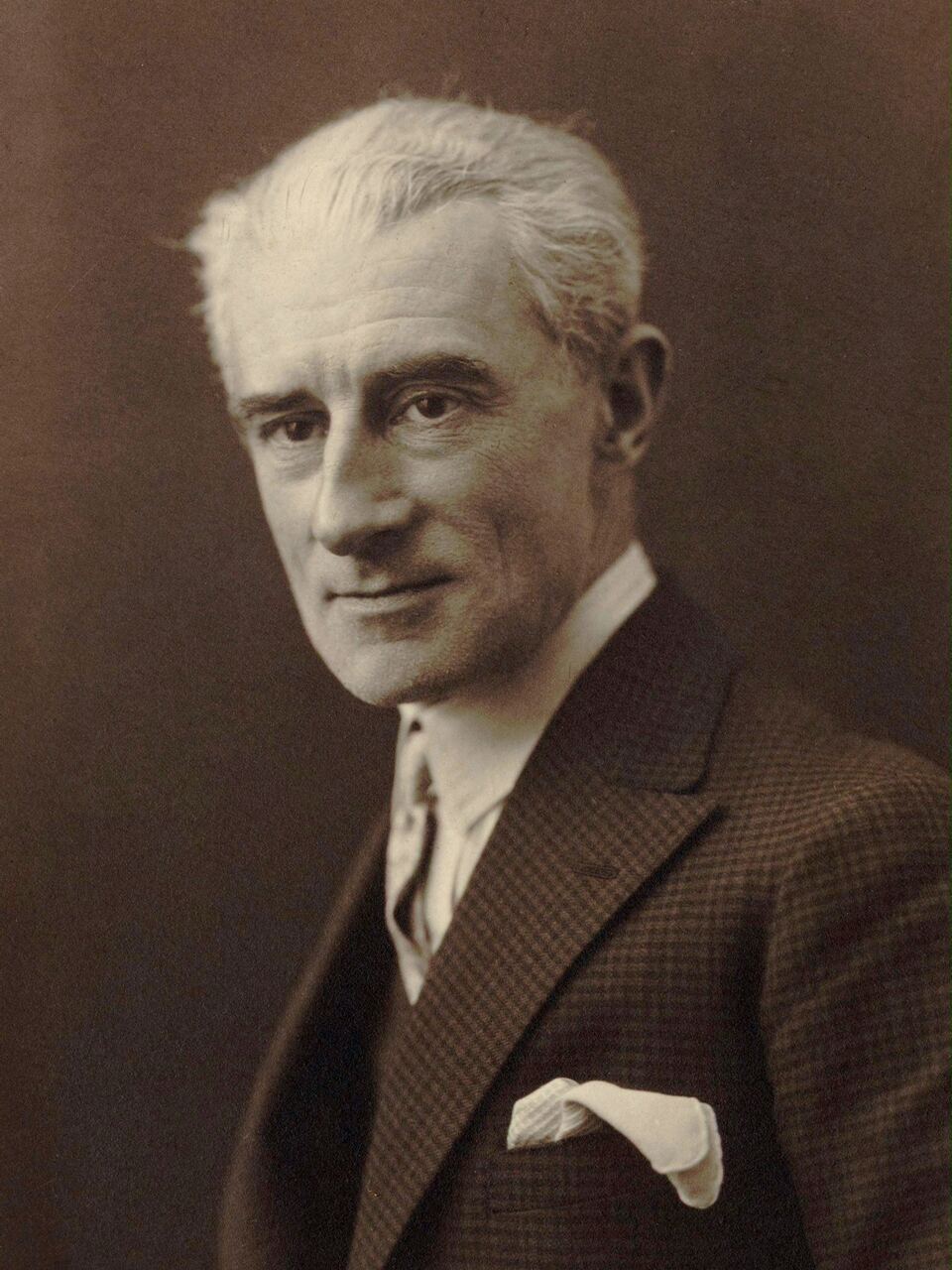
Ravel dedicated this sonata “to the memory of Claude Debussy,” whom he considered the founder of modern French music. The first movement appeared in 1920 in a special Debussy commemorative edition of La Revue musicale. It took him nearly two more years to complete the piece as he endeavored to craft an original and authentic modernist voice. He called this challenging work “a machine for two instruments,” and declared it a turning point in his creative evolution: “The music is stripped down to the bone. Harmonic charm is rejected, coupled with an increasing emphasis on melody.”
The sonata’s intensity derives from the uncompromising drive of the instruments’ individualistic melodic lines, by turns independent, confrontational, and imitative. The spiky opening movement, “Allegro,” shifts between minor and major while upending conventional expectations of sound with a vast array of textures and articulations. The Scherzo (“Very lively”) exploits the extremes of each instrument’s register as well as the opposition between plucked and bowed strings. The austere third movement (“Slow”) rises from the dark depths to an anguished climax, before its opening melody returns and fades sadly away. The finale (“Lively, with enthusiasm”) is a perpetual motion parade of themes, dances, and rhythmic motifs, culminating in a strident whirlwind of melodies from this and the first movement that races to an incongruent C Major close.
Igor Stravinsky (1882-1971): Suite from L’Histoire du Soldat for violin, clarinet, and piano (1918-19)

In 1914, months before the outbreak of World War I, Stravinsky moved from Paris, where he was working, to Switzerland, so his ailing wife could recover in the mountain air. Once war began and the Russian Revolution erupted, he was stuck there; concertizing became impossible, royalties from his German publishers ceased, and payments from his Ukrainian family estate were cut off. In 1918, to ward off financial disaster, he composed L’Histoire du Soldat (“The Soldier’s Tale”), a portable theatre piece for 7 players, 3 actors and a dancer that could be easily performed anywhere. He arranged the trio version in 1919 to offer increased flexibility for performance. The story is based on the Russian folk tale of a soldier who deserts the army and trades his violin to the devil in return for riches. The soldier wins back his violin through trickery, but ultimately the devil claims the soldier’s soul. Stravinsky’s modernist attitudes show in the work’s spurning of the concert hall, use of “low art” tango and ragtime music, parodying of the march and waltz, irregular meters, abrasive accents, short, jagged melodies, biting dissonances, and mechanistic repetitions.
The ungainly and plodding “Soldier’s March” opens the trio. As the soldier plays a meandering tune on his violin (“The Soldier’s Violin”), the devil notices and finagles the trade. Later, the soldier plays exuberantly (“The Little Concert”) after beating the devil at cards and regaining his instrument. The driving energy of the dances the soldier performs (“Tango – Waltz – Rag”) revives a dying princess who becomes his wife. In the final movement (“The Devil’s Dance”) the soldier flaunts his musical prowess, forcing the devil into a maniacal frenzy.
Leoš Janáček (1854-1928): Quartet No. 1 “The Kreutzer Sonata” (1923)

This quartet is one of the brilliant modernist works composed during the creative explosion of the last decade of Janáček’s life. Inspired by Tolstoy’s novel of the same name about a man who, suspecting his wife of infidelity, murders her in a jealous rage. It aligns with the social agenda of other works like his operas Jenůfa and Kát’a Kabanová that protest the “despotic attitude of men toward women” by depicting the possessiveness and abuse legitimized by conventional marriage.
Janáček discards harmonic continuity, embracing volatility of mood. He uses a montage construction that freely rearranges themes, and revels in jarring, discordant timbral effects. The quartet begins with a slow, agonized outcry that engages in agitated dialogue with a quick gesture evoking edgy, obsessive grumbling. The opening passage of the capricious second movement repeatedly builds up speed but breaks off, a process that alternates with eerie episodes played on the instruments’ bridges and a compulsive, aggressive rant. The third movement is like an operatic duet which strives to express passion while hostile forces intrude. The despondent finale commences by restating the quartet’s opening outcry, marked “as if in tears,” frantically reaching an apex of despair before giving up.
Janáček’s lifelong study and documentation of Czech speech intonations and rhythms infuse his vast output of vocal music but also pervade his instrumental works. He believed these “speech-melodies” revealed one’s innermost thoughts and emotions beyond what was objectively expressed. The short, vividly distinctive melodic units that constitute the material of this quartet exemplify his pursuit of an original synthesis of music and psychological truth.